5 monthly questions to move you forward 5x faster towards any goal
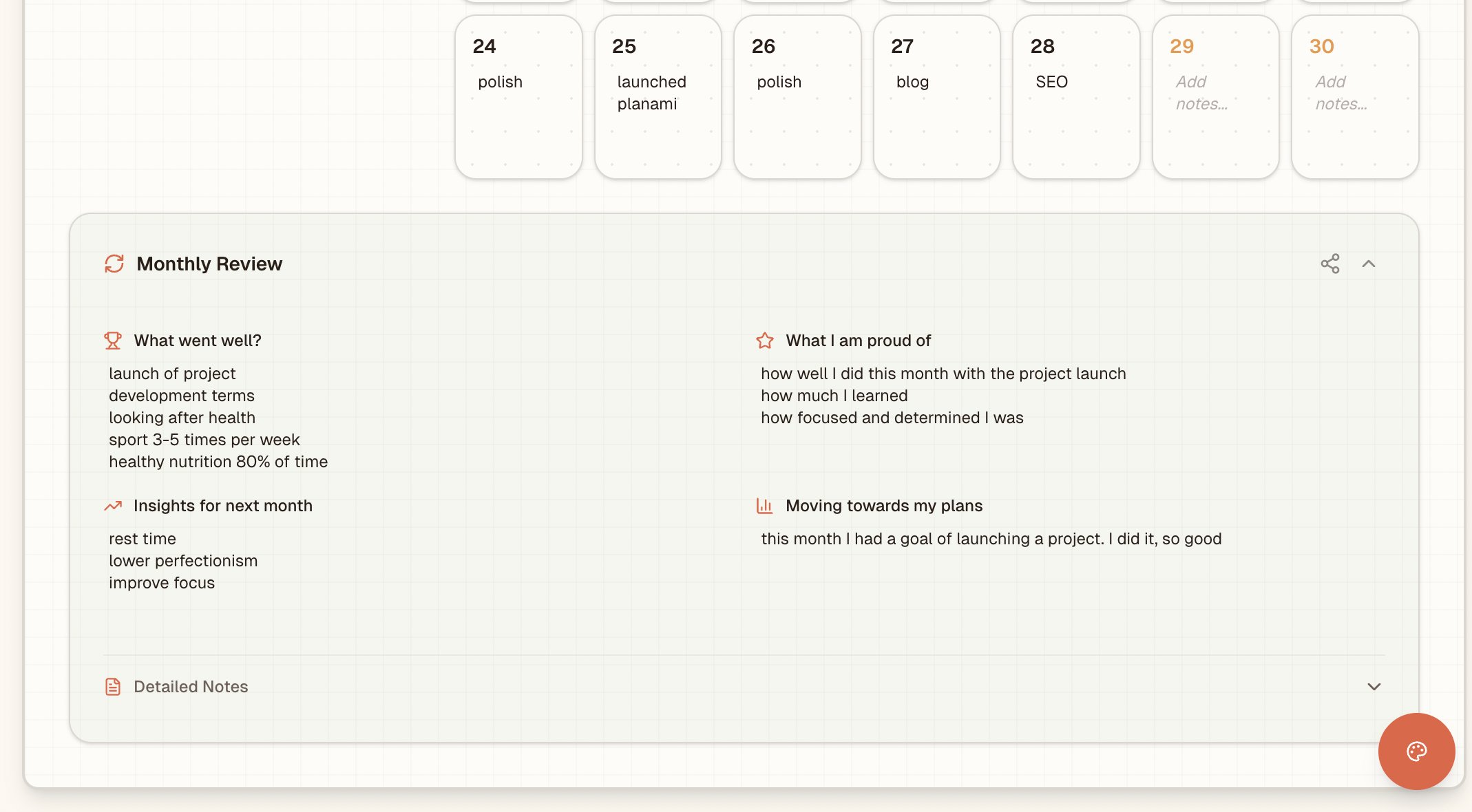
A monthly review doesn't need to be a two-hour production. Five focused questions — are enough to see what worked, what didn't, and what matters next.
The end of a month is a strange moment. You know a lot of time has passed. You're less sure what it contained. A monthly review is the ten-to-fifteen minutes that turns a month-shaped blur into something you can actually learn from.
You don't need a two-hour ritual, a color-coded spreadsheet, or a lengthy journaling session. You need five good questions — asked with curiosity rather than judgment — and somewhere quiet to answer them. Here they are.
Why a monthly review matters more than you think
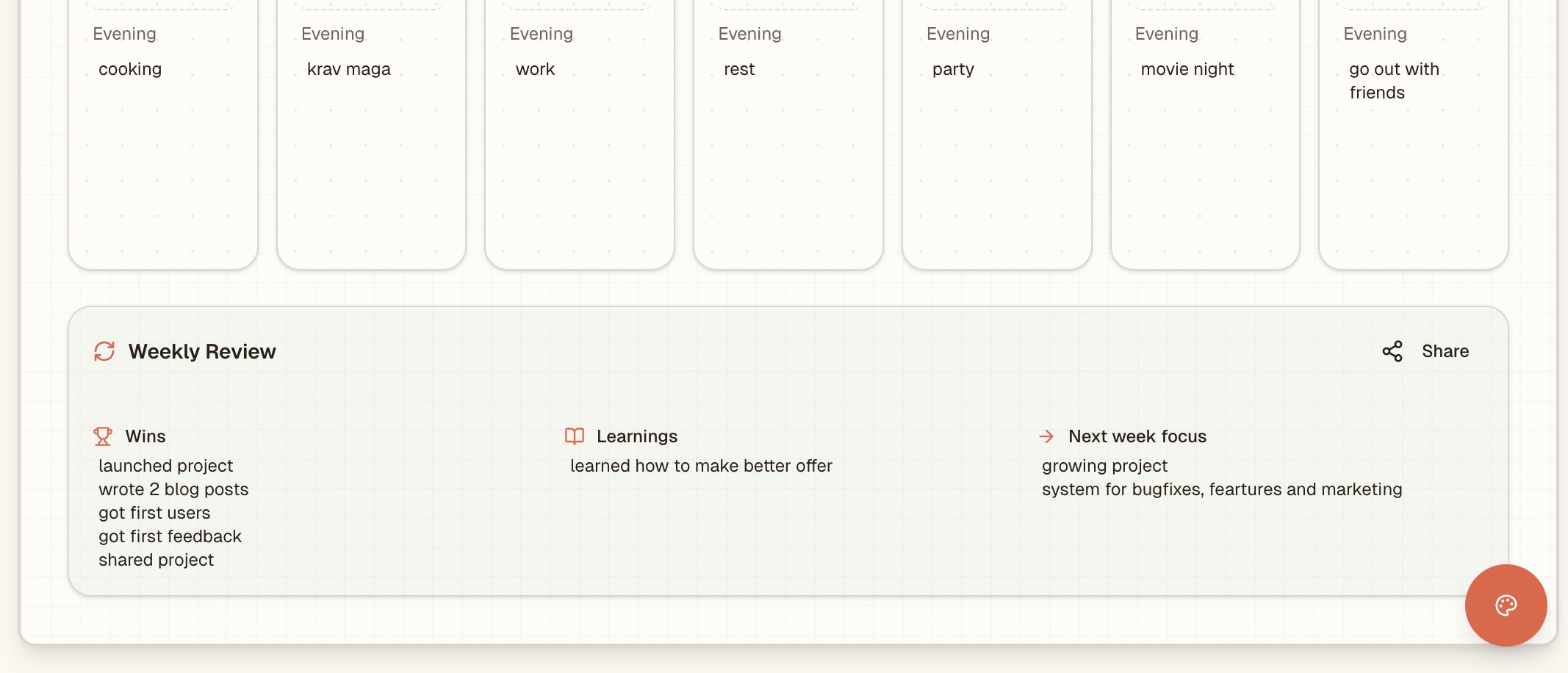
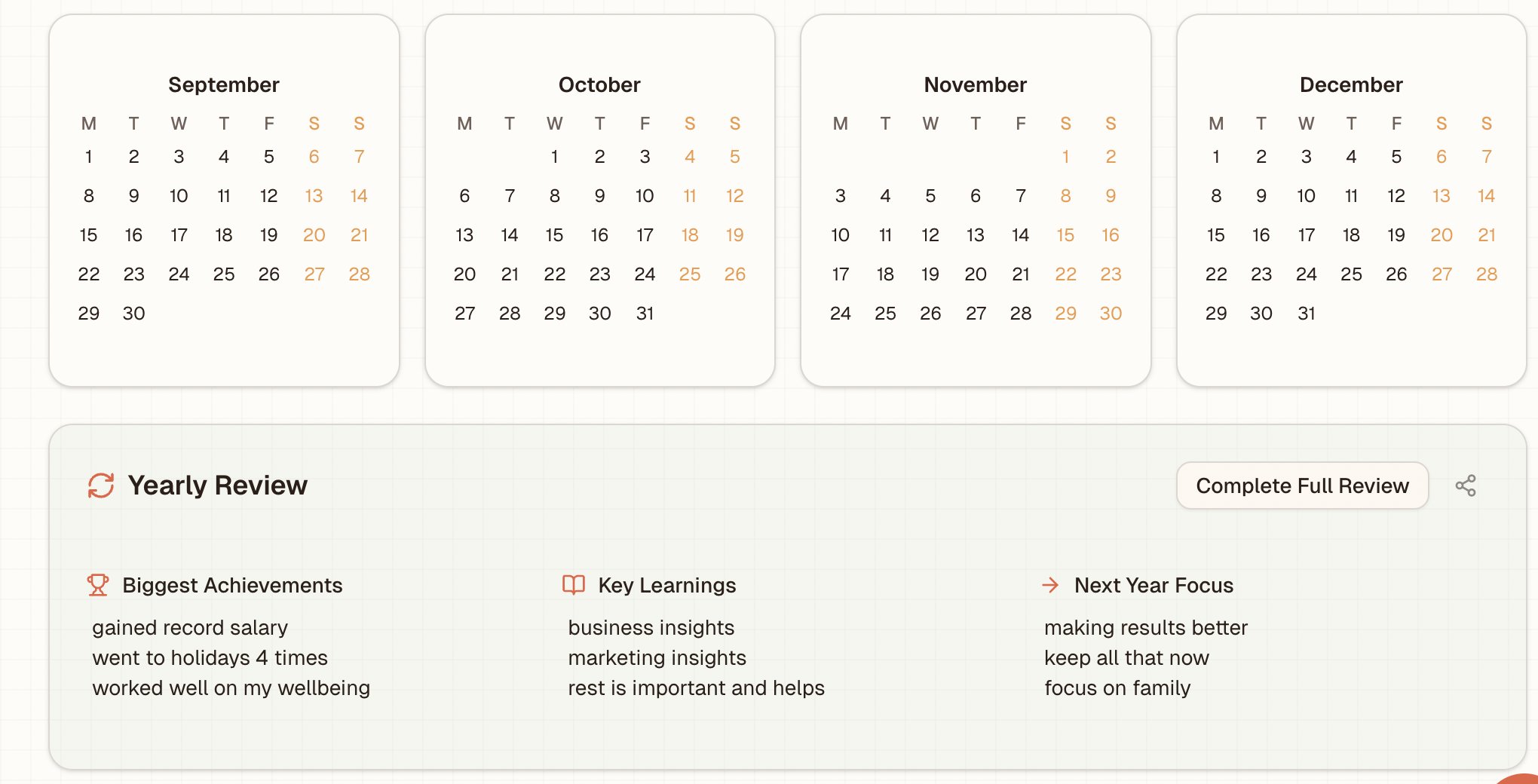
Weekly reviews keep your goals alive day-to-day. Yearly reviews zoom out to the big picture. The monthly review is the layer most people skip — which is exactly why skipping it costs so much.
A month is long enough for patterns to appear that a single week can't show you. The habit that's quietly slipping. The goal that keeps getting pushed to "next week" until it's been pushed for four weeks running. The repeated win you haven't noticed because it happened too gradually.
Research on reflection and performance consistently finds that pausing to examine what happened — rather than just ploughing ahead — measurably improves how you perform next. One set of studies found reflection groups outperformed non-reflection groups by nearly 23%. The monthly review is a way to earn that improvement twelve times a year instead of once.
The five questions
1. What actually went well this month — however small or unglamorous?
Start here, not with what went wrong. This isn't toxic positivity — it's calibration. Most people systematically undercount their wins because progress feels ordinary from the inside. Writing it down forces you to see what was real.
Be specific. "Made progress on the project" tells you almost nothing. "Finished the first draft by Wednesday even though I had two unexpected calls" tells you something you can use: you can work around disruptions when you commit early in the week.
2. What was harder than it needed to be — and why?
Not "what failed," but "what created unnecessary friction." The task you kept delaying. The week that felt chaotic when the one before it felt calm. The meeting that could have been an email.
You're looking for the gap between effort and output. Sometimes the gap is external — a bad week, a sick kid, an urgent interruption you couldn't avoid. But often it's structural: a recurring distraction you haven't fixed, a habit that's eroding, a goal that never had a clear next step.
3. Which goals moved forward — and which quietly stalled?
Pull out whatever goal list you maintain and check each one honestly. Not "am I on track for the year" — that's too abstract. Just: did this goal move in the last 30 days?
A goal that didn't move for a month isn't necessarily dead. But it deserves a look. Is it still something you actually want? Did something change that made it less urgent? Or did it stall simply because you never scheduled a concrete step into your week? The monthly review is the right moment to decide which of these is true, because left unchecked, all three look identical from the outside.
4. What drained me — and what gave me energy?
This is the question most planning tools skip, and it's the one that quietly shapes everything else. You can set technically correct goals and still end the month exhausted if you've miscalibrated what your work actually costs you.
You're not looking for a therapy session — just a quick scan. Which days felt good? Which felt like pushing through mud? Were there patterns in the type of work, the time of day, the people involved?
Over time, this question builds a picture of how you actually function versus how you imagine you function. That gap is one of the most useful things you can know about yourself.
5. What's the one thing that would make next month feel like a success?
Not five things. Not a full plan. One thing — the anchor goal that, if nothing else happened, would still make the month feel worthwhile.
This forces prioritization in a way that general planning doesn't. Most people have too many priorities, which means they have no priorities. Choosing one doesn't mean ignoring everything else; it means you have a clear answer when the month gets messy and you need to decide what matters most.
Write down when and how you'll start that one thing in the first week of the month. Deciding in advance is one of the most reliable ways to actually follow through — the research on implementation intentions consistently shows that adding a "when" and "where" to an intention significantly increases the chance it happens.
How to make it a habit
The review that works is the one you'll actually do, so make it easy. Pick a consistent day — the last Sunday of the month, the first Saturday morning, whatever has the fewest competing demands. Keep the bar low: five honest questions in fifteen minutes is far better than a comprehensive review you do twice and abandon.
If you're writing your answers somewhere they'll carry forward — a notebook, a planner, a document — you get an extra return on the investment: you can look back and see the patterns across months that you can't see in any single review.
In Planami, the monthly review is built into the planner alongside your weeks and goals, so you're reviewing in context rather than from scratch. But whatever tool you use, the five questions work the same way: curiosity in, clarity out.
Try it at the end of this month. Fifteen minutes. Five questions. You'll know more about how you work than most people who've been working for years.
Sources
- Di Stefano, Gino, Pisano & Staats — "Learning by Thinking," Harvard Business School: read the paper
- Gollwitzer & Sheeran (2006) — Implementation intentions meta-analysis, Advances in Experimental Social Psychology: overview
- Amabile & Kramer — "The Power of Small Wins," Harvard Business Review: read the article