Why doing random things takes 100x longer — and the calm system that fixes it
I rebuilt how Planami works around one idea: progress isn't about doing more, it's about doing the right things in the right order. Here's the system — and the science behind every part of it.
For a long time I thought being busy was the same as making progress. I'd end most days exhausted, with a full to-do list and a quiet, nagging feeling that none of it was actually moving my life anywhere. So I rebuilt how Planami tells its story around a single idea: you don't need to do more — you need to do the right things, in the right order, and actually see that you did them.
This post walks through the system I now show on the homepage, top to bottom — not just the headline. It's the same order you actually live your life in: from your biggest dream all the way down to today, and then back up through reflection. And because I don't want you to take any of it on faith, every part is backed by published research, linked at the bottom.
The problem isn't you. It's the missing system.
When your plans are scattered across five apps and a notebook, when your wins disappear the moment they happen, and when every day feels busy but not meaningful — that's not a discipline problem. It's a system problem. And the cost of not having a system is bigger than it looks.
Doing random things, in random order, without a clear picture of where you're going, doesn't just feel inefficient. It is inefficient — it can take an order of magnitude more time and effort to get nowhere in particular. Five minutes of clarity genuinely beats hours of wandering.
The system, in the order you live it
Here's the spine of how Planami is meant to work. Each step flows into the next.
1. Start with what you actually want
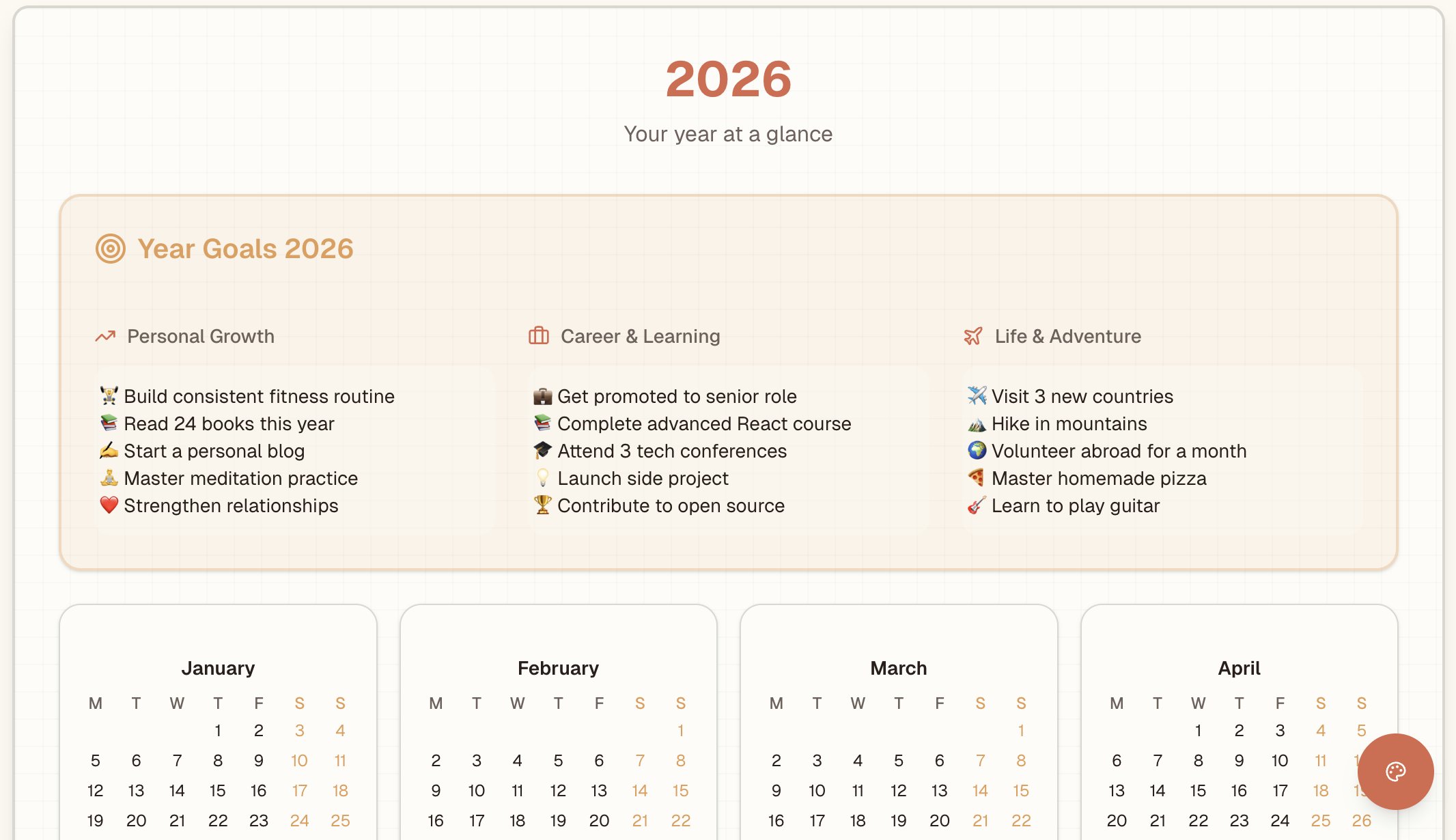
Everything begins with your vision and big goals. You name the dreams that matter to you and break each one into real, doable steps, so they stop being "someday" and start being "this month." This is the part most planners skip — and it's the part that gives every other day its direction.
2. Zoom out to the year
Those goals land on a calendar. You see the shape of your whole year before it happens to you, instead of reacting to it week by week.
3. Turn the year into this week
The year becomes months, and months become weeks. The point is that what you do on Monday actually points at something bigger — not just whatever shouted loudest in your inbox.
4. Plan today in five minutes
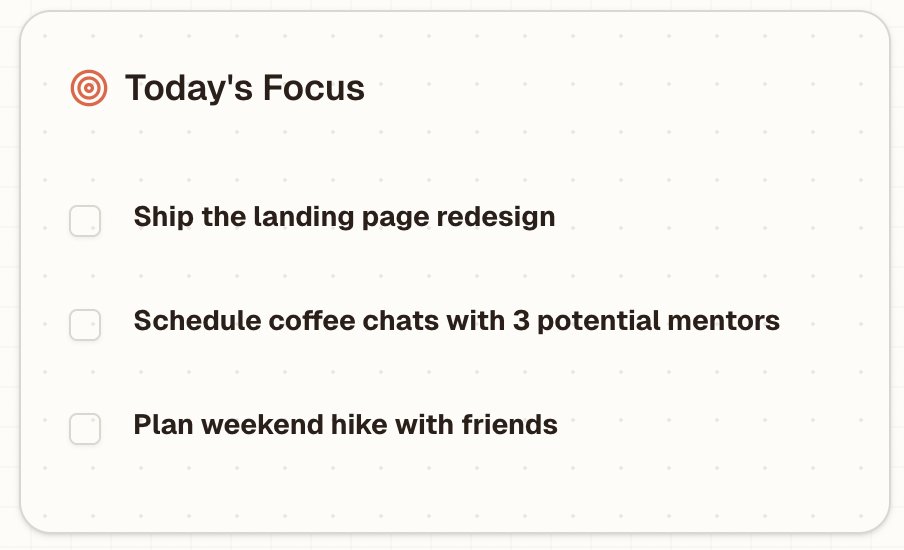
This is where life actually happens. Schedule your day, pick your top three priorities, jot a line of gratitude. Calm, not cramped. The whole idea: never guess what to do next — just follow the system.
5. Notice how you feel, not just what you finished
Mood, habits, stress, gratitude — gentle inputs that, over time, reveal patterns about what actually energizes you and what drains you.
6. Then look back — and see how far you came
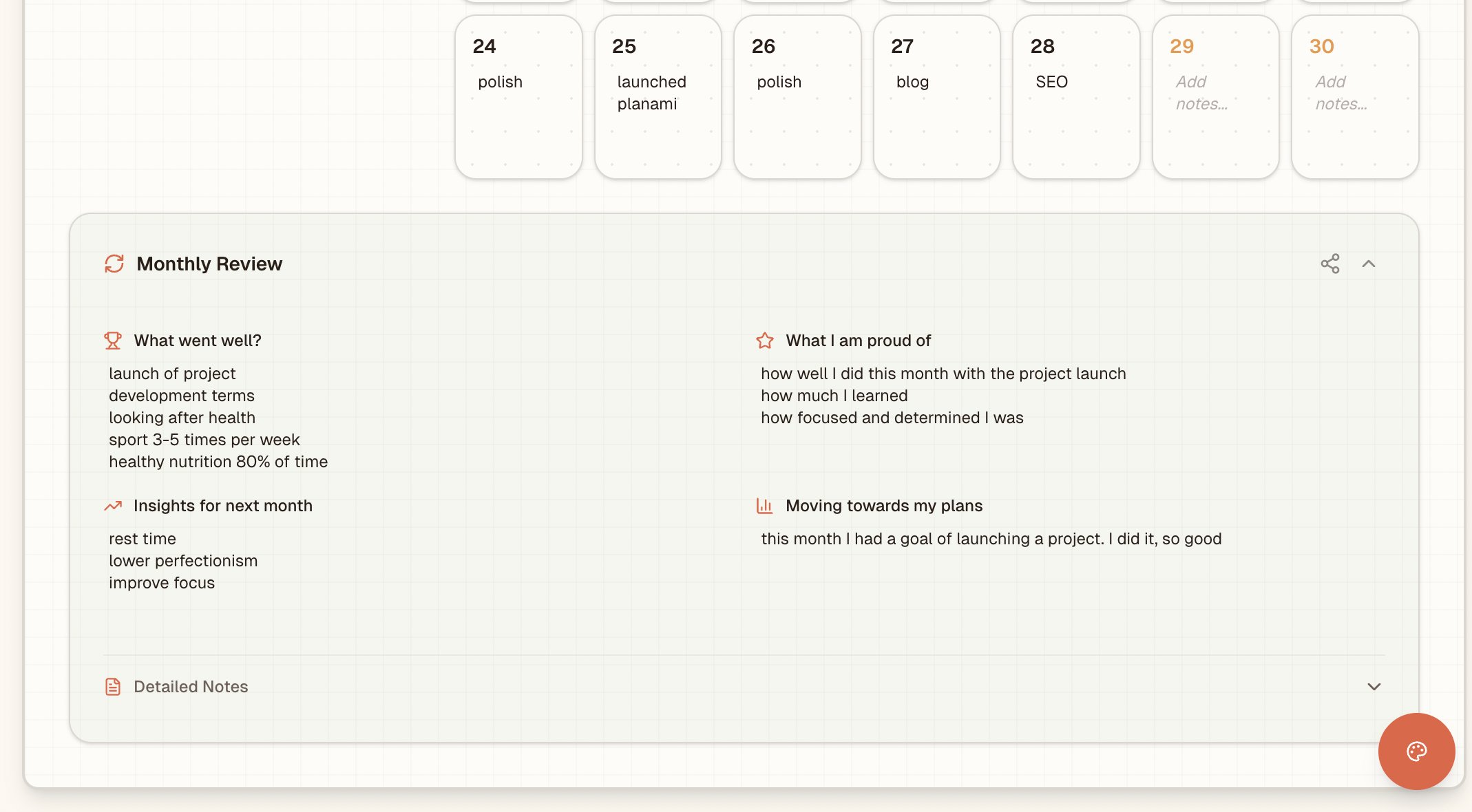
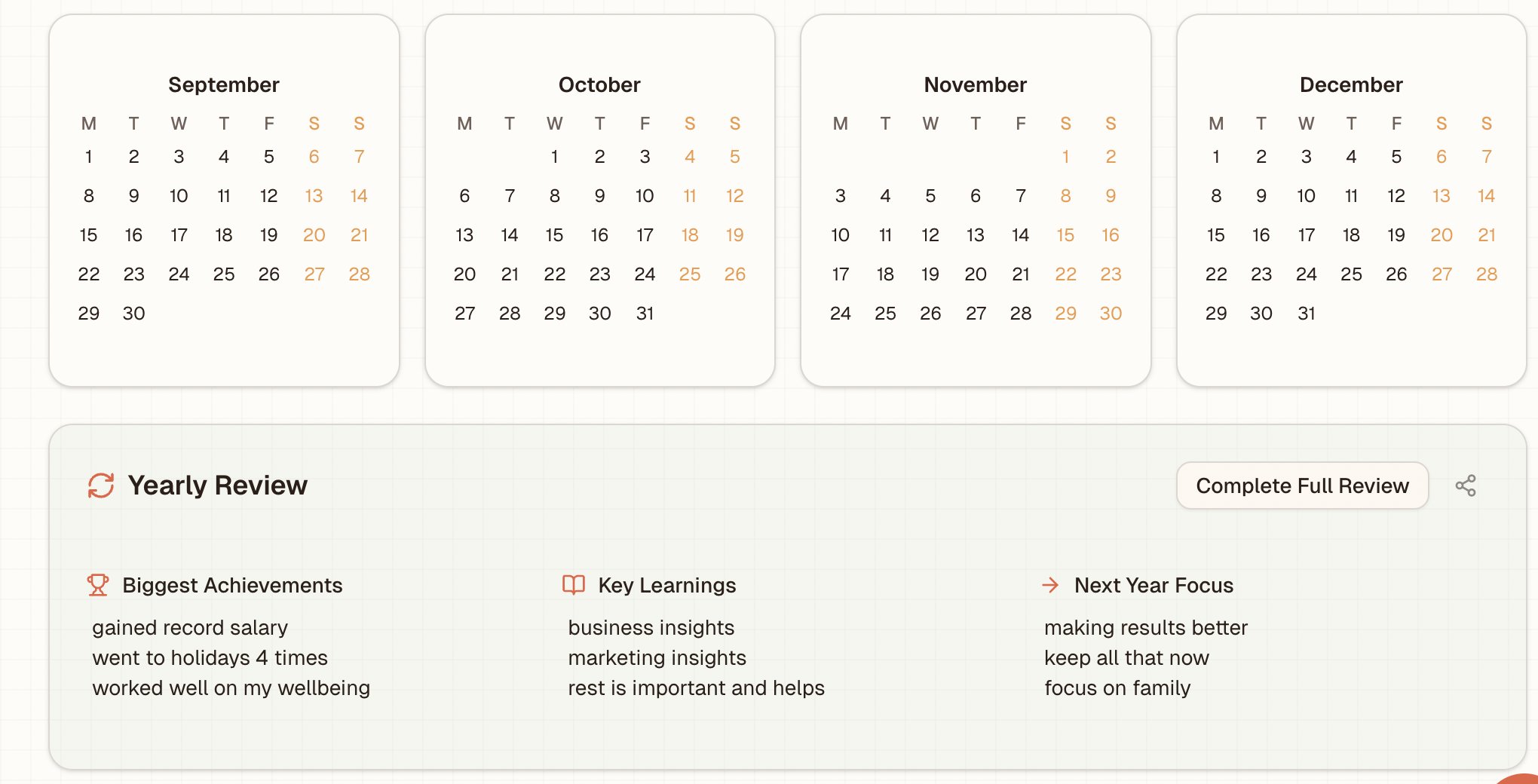
This is the part I personally couldn't live without anymore. Structured weekly, monthly, and yearly reviews turn a pile of scattered days into a clear story of progress. It's the difference between feeling like nothing changed and seeing, in black and white, exactly how much did.
"But why would I spend time on this?"
Because the alternative is slower. A few minutes spent setting a clear picture saves you from hours — sometimes weeks — of effort spent on the wrong things, in the wrong order, restarting the same goals every January. A structured vision plan makes the clear picture possible, so your time finally compounds toward the life you actually want instead of evaporating.
The science behind every piece
None of this is a productivity trend. Each part of the system rests on decades of research:
- Writing goals down works. In a study of 267 people, those who wrote their goals and sent weekly progress updates reached or were halfway to them 76% of the time — versus 43% for those who only thought about them.
- Reflection improves performance. Across lab and field experiments, people who spent a few minutes reflecting on their work scored 22.8% higher than those who just kept going. That's the entire case for built-in reviews.
- Tracking drives results. A meta-analysis of 138 studies found that monitoring your progress reliably increases the chance you'll reach your goal — and the effect is stronger when progress is physically recorded.
- Concrete plans get done. Deciding when and where you'll act — not just what you want — produces a medium-to-large increase in follow-through across 94 studies.
- Gratitude lifts wellbeing. People who regularly write down what they're grateful for report more optimism, more exercise, and fewer physical complaints.
Planami doesn't replace these practices — it makes them effortless and keeps them in one calm place, so the science just happens in about five minutes a day.
One calm space instead of a shelf of tools
The other quiet benefit: this replaces a whole shelf of separate things — a paper planner, a habit tracker, a journaling app, and the kind of structure you'd normally pay a coach for. Bought separately, that's hundreds of dollars a year. Together, in one place, it's a single calm ritual.
What you're really building
Here's the part that keeps me going. In twelve months, you'll look back and see exactly who you became — and feel proud you started today. Big dreams aren't built in the future; they're built in how you spend this ordinary week.
If that's the kind of progress you want — steady, visible, and calm — try Planami. You can start free, no card required, and keep it only if you feel the difference.
Sources
- Matthews, G. — Goals study, Dominican University of California: read the study
- Di Stefano, Gino, Pisano & Staats — "Learning by Thinking," Harvard Business School: read the paper
- Harkin et al. (2016) — Monitoring goal progress meta-analysis, Psychological Bulletin: overview
- Gollwitzer & Sheeran (2006) — Implementation intentions meta-analysis: overview
- Emmons & McCullough (2003) — "Counting Blessings Versus Burdens": overview