How to do a personal year in review (without the cringe)
A yearly retrospective isn't about grading yourself — it's about seeing how far you came and choosing where to go next. Here's a calm, simple way to do one that actually helps.
The first time I tried a "year in review," it turned into a quiet self-interrogation: a list of everything I'd meant to do and hadn't. I closed the notebook feeling worse than when I opened it. It took me a while to realize I'd been doing it backwards. A year in review isn't a performance evaluation. It's a chance to see how far you actually came — and to choose, on purpose, where you go next.
Done with a little kindness, it's one of the most clarifying hours you can give yourself. Here's how I do it now, without the cringe.
Why a yearly review is worth the time
Reflection isn't navel-gazing — it genuinely changes outcomes. People who pause to reflect on their experience perform measurably better afterward; in one set of studies, a reflection group outperformed others by 22.8%. Looking back is how you extract the lesson so the next stretch goes better.
There's also a quieter benefit. A full year of ordinary days is almost impossible to feel in the moment, but seen all at once it tells a real story. Recognizing that progress is one of the strongest things we know of for motivation and wellbeing — and most of us never give ourselves the chance to see it.
Before you start: set the tone
Give yourself an unhurried hour, something warm to drink, and one rule: curiosity, not judgment. You're a friendly historian of your own year, not a manager handing out a review. If a hard memory comes up, note what it taught you and move on.
The questions that actually help
Look back with honesty and warmth
- What are the wins I'm genuinely proud of — including the small and unglamorous ones?
- What did I do that my past self would be amazed by?
- What were the hardest moments, and what did they teach me?
- Who and what gave me energy this year? What drained it?
Notice the patterns
- What kept showing up — the same recurring distraction, the same kind of work that lit me up?
- Which goals moved forward, and which never got traction? Why?
- How did I actually spend my time versus how I wanted to?
Choose what's next
- What do I want more of next year? What do I want to leave behind?
- If next year had one theme, what would it be?
- What are the two or three goals that would make next year feel like a success — and what's the obstacle to each?
That last question matters: naming the obstacle alongside the goal, and deciding in advance how you'll handle it, is one of the most reliable ways to actually follow through rather than just resolve.
Turn reflection into direction
A review that ends in feelings is nice; a review that ends in a plan is powerful. Take the two or three goals you landed on and break each into first steps you could start this month. The whole point of looking back is to aim the year ahead.
You don't have to wait for December, either. A year in review works any time you want a reset — a birthday, a new season, or just a quiet Sunday.
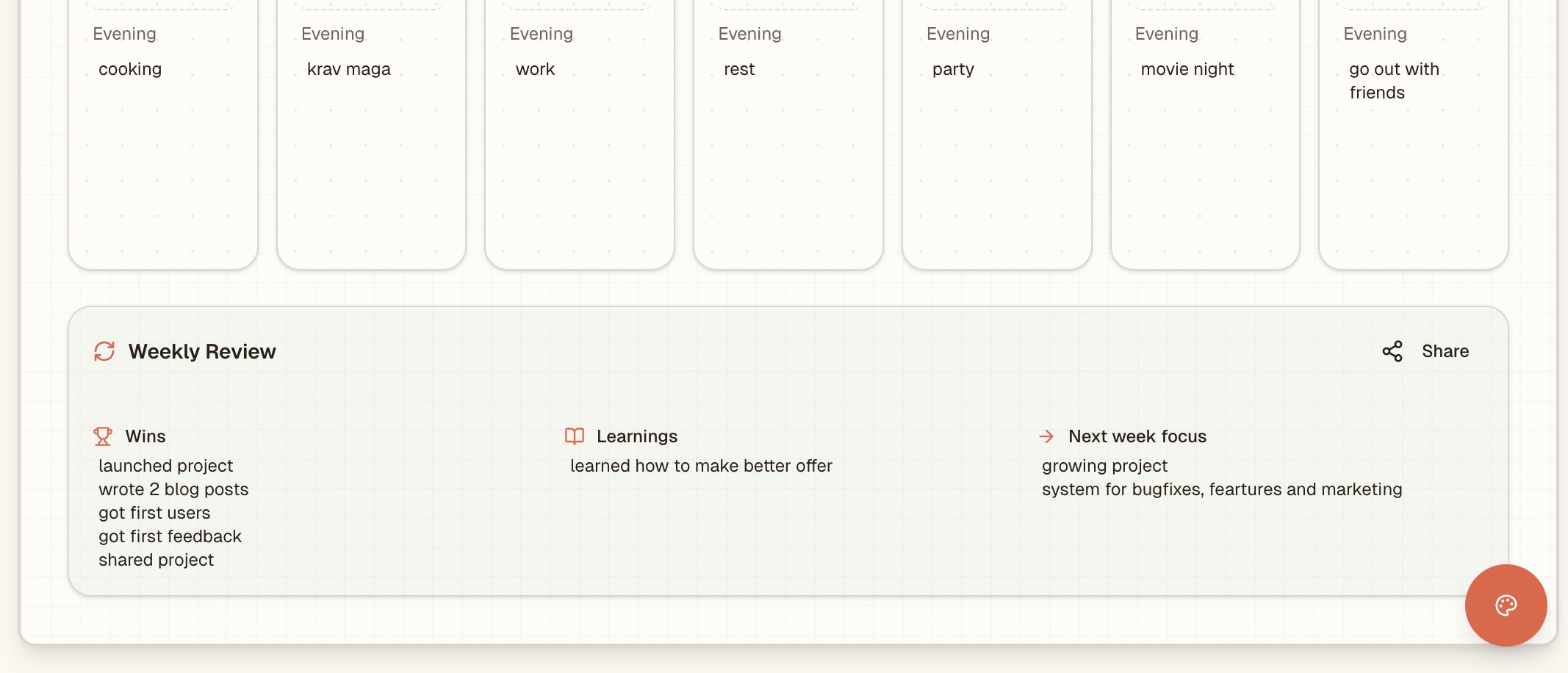
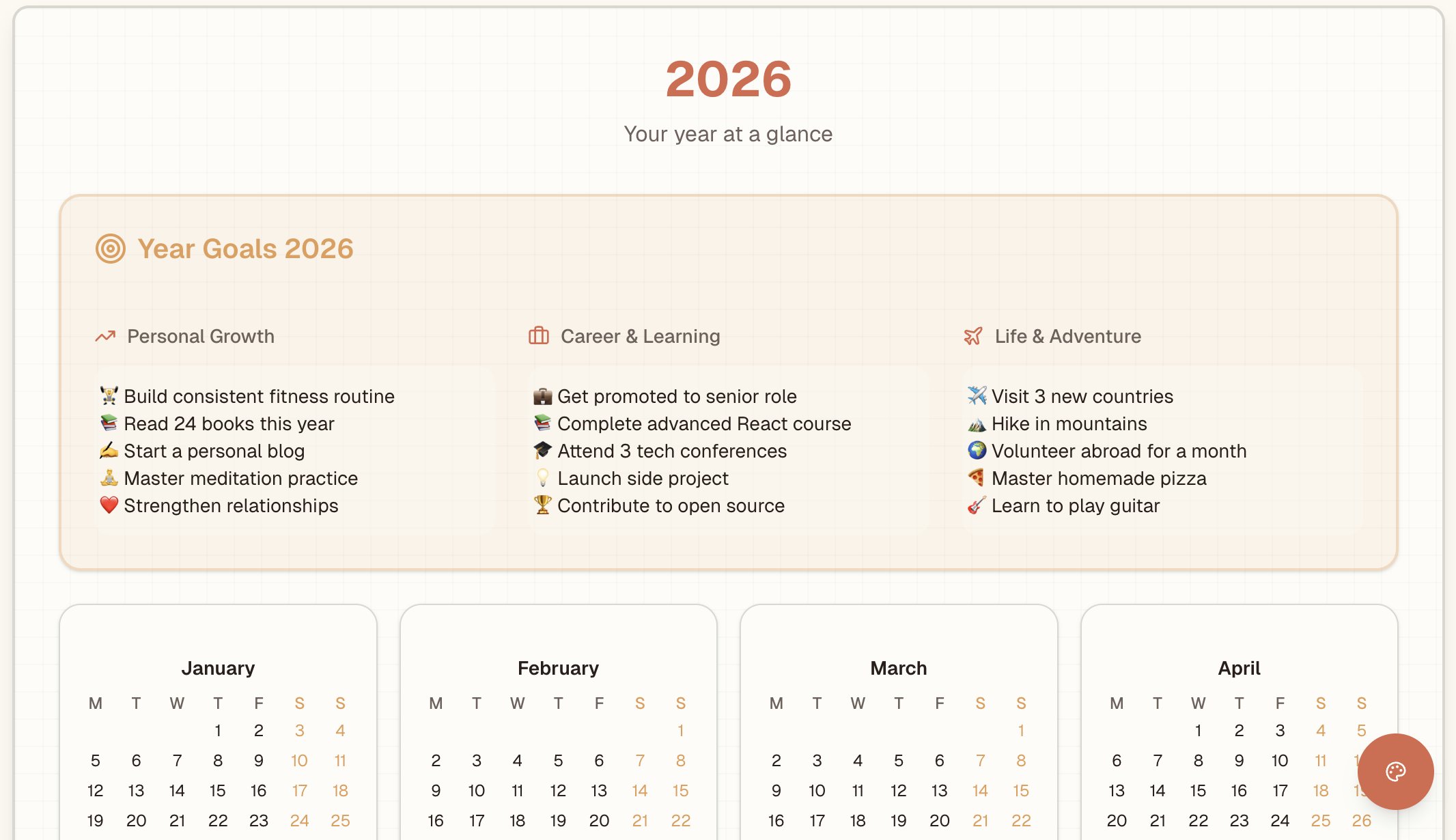
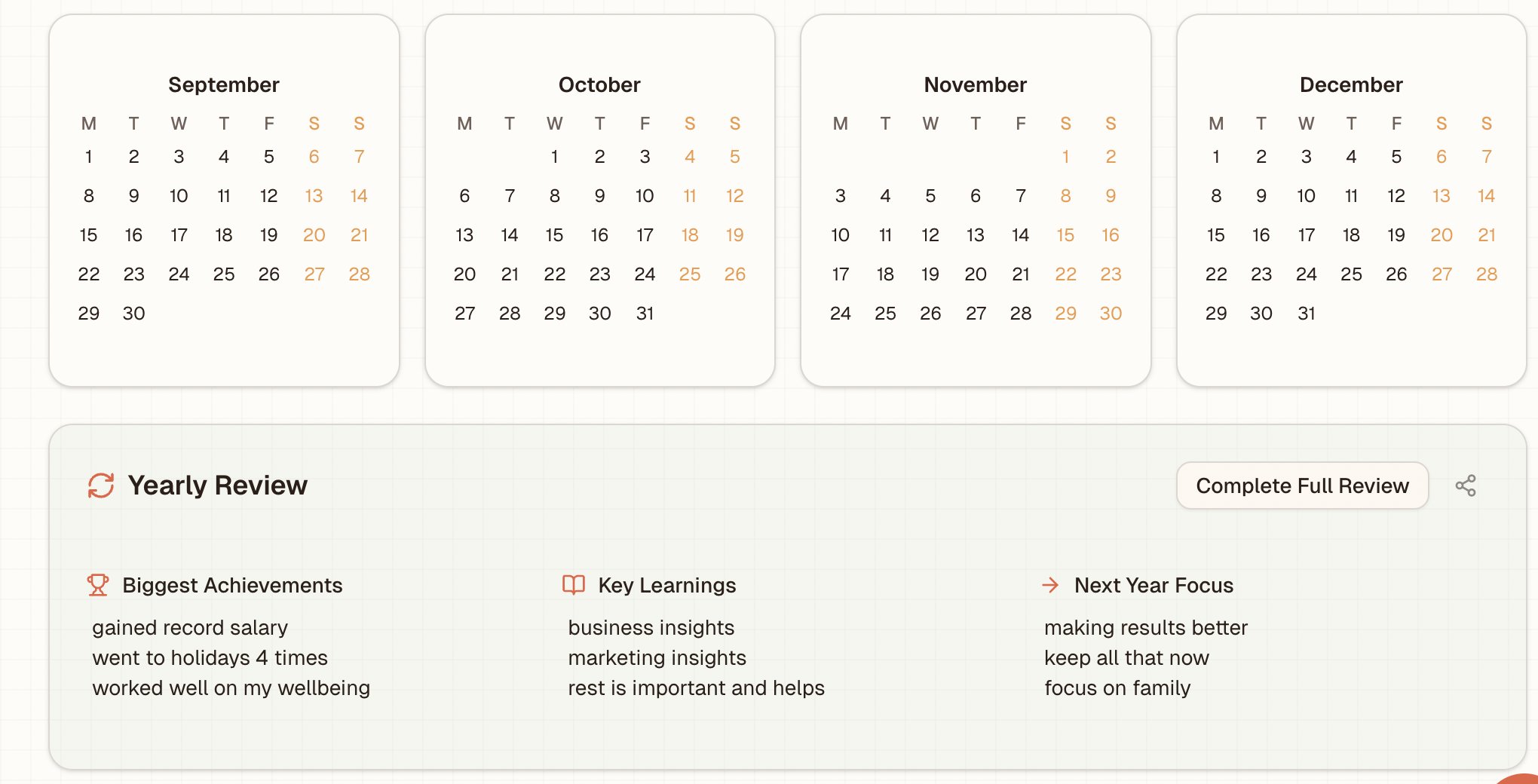
In Planami, the yearly retrospective is built right in, sitting on top of the weeks and months you've already logged — so instead of staring at a blank page trying to remember your year, you review a year that's already there. Pair it with a simple weekly review and reflection stops being a once-a-year event and becomes the quiet engine of your growth.
Sources
- Di Stefano, Gino, Pisano & Staats — "Learning by Thinking," Harvard Business School: read the paper
- Amabile & Kramer — "The Power of Small Wins," Harvard Business Review: read the article
- Gollwitzer & Sheeran (2006) — Implementation intentions meta-analysis: overview