Why vision boards don't work — and the version that does
Just picturing your dream life can quietly make you less likely to reach it. Here's what the research really says about vision boards — and how to build one that drives action instead of daydreams.
I love a beautiful vision board as much as anyone. There's something genuinely powerful about seeing the life you want laid out in front of you. But here's the uncomfortable truth I had to learn: if a vision board is only a collection of dreamy images, it can quietly make you less likely to actually get there.
That sounds backwards, so let me explain — and then show you the version that works, because the answer isn't to stop dreaming. It's to stop dreaming alone.
The surprising research on positive fantasy
Psychologist Gabriele Oettingen spent years studying what happens when people vividly imagine their goals already achieved. The result, replicated across very different groups — job seekers, dieters, students, patients recovering from surgery — was consistent and a little alarming: the people who fantasized most positively about success tended to achieve less. They lost fewer pounds, got fewer job offers and lower salaries, earned worse grades, and recovered more slowly.
Why? Because vividly picturing success tricks your brain into feeling like you've already arrived. The fantasy is so satisfying that it drains the energy you'd need to do the actual work. Pure positive thinking, it turns out, can sap motivation rather than build it.
This is why "manifest it and it will come" so often disappoints. Belief matters — but belief without action is just a pleasant daydream.
The fix: pair the dream with the obstacle and a plan
Oettingen's solution is a simple four-step method called WOOP — Wish, Outcome, Obstacle, Plan — also known as mental contrasting. Instead of only imagining the wonderful outcome, you deliberately contrast it with what stands in your way, and decide in advance how you'll respond.
- Wish: name what you genuinely want.
- Outcome: picture the best result and how it would feel — let yourself enjoy it.
- Obstacle: get honest about the real thing inside you that gets in the way.
- Plan: make an if-then plan — "if [obstacle happens], then I will [specific action]."
People who do this don't just feel more motivated — they actually persevere and succeed more often, because the dream has been wired to a concrete next step. And that last part matters on its own: deciding exactly when and where you'll act reliably increases follow-through across dozens of studies.
How to build a vision board that drives action
You don't have to throw away the beautiful part. You just have to attach it to reality.
1. Keep the inspiration — but make it specific
Images of the life you want are great fuel for self-belief, and believing you can do something genuinely affects whether you try. Just make each image stand for a real goal, not a vague vibe.
2. Turn every dream into a goal with steps
Under each image, name the goal and break it into a few doable steps. "Travel more" becomes "Save $200/month and book one trip by autumn." A dream you can schedule is a dream you can reach.
3. Name the obstacle honestly
For each goal, ask: what usually stops me? Write it down. This single step is what separates a vision board that works from one that just decorates a wall.
4. Revisit it — and act on it
Look at your board regularly, then convert it into this month and this week. A vision that never touches your calendar stays a fantasy.
Dream big, then do
The goal isn't to dream less. It's to make sure your dreaming has somewhere to go. Believe you can — and then take the next real step, this week.
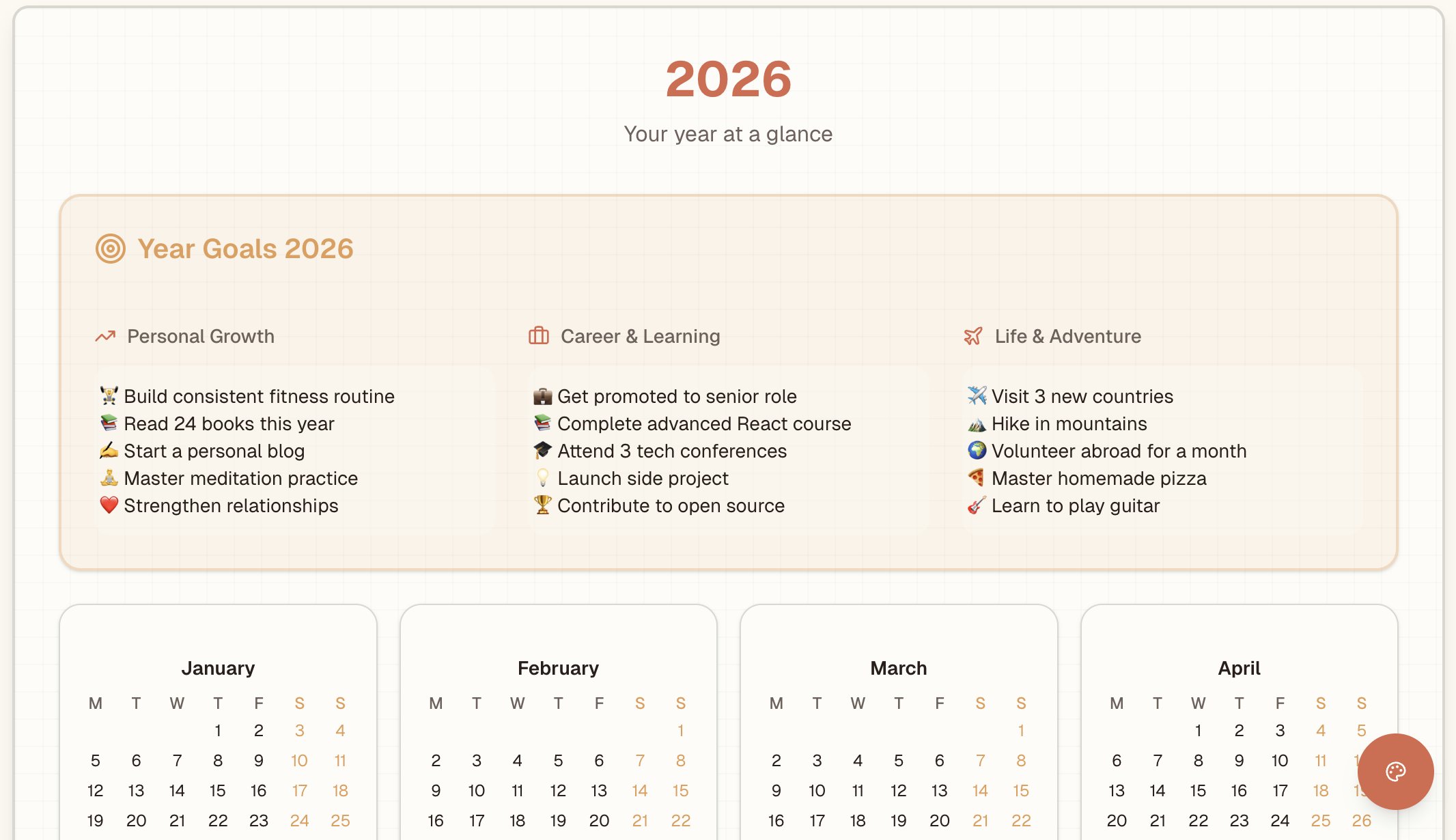
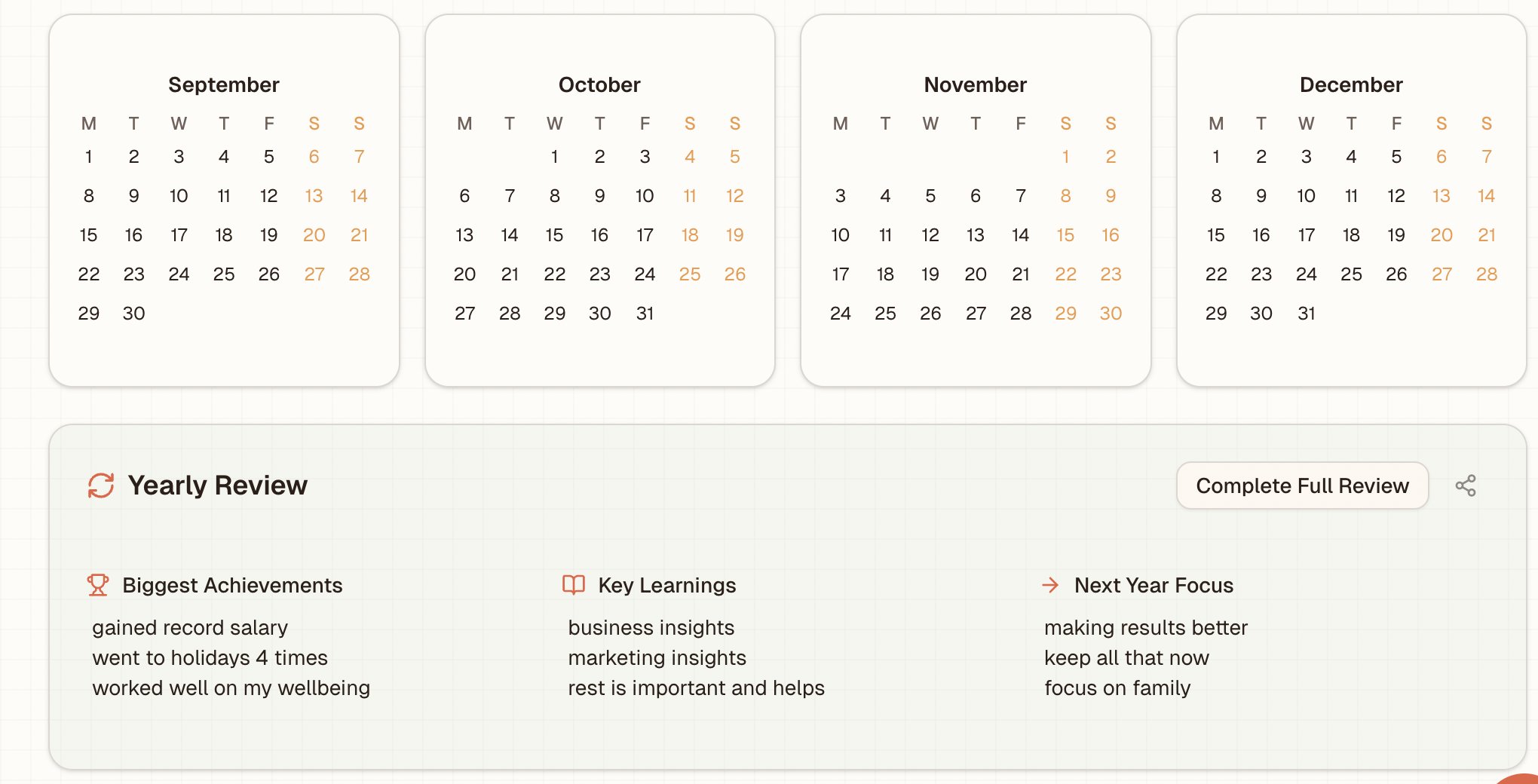
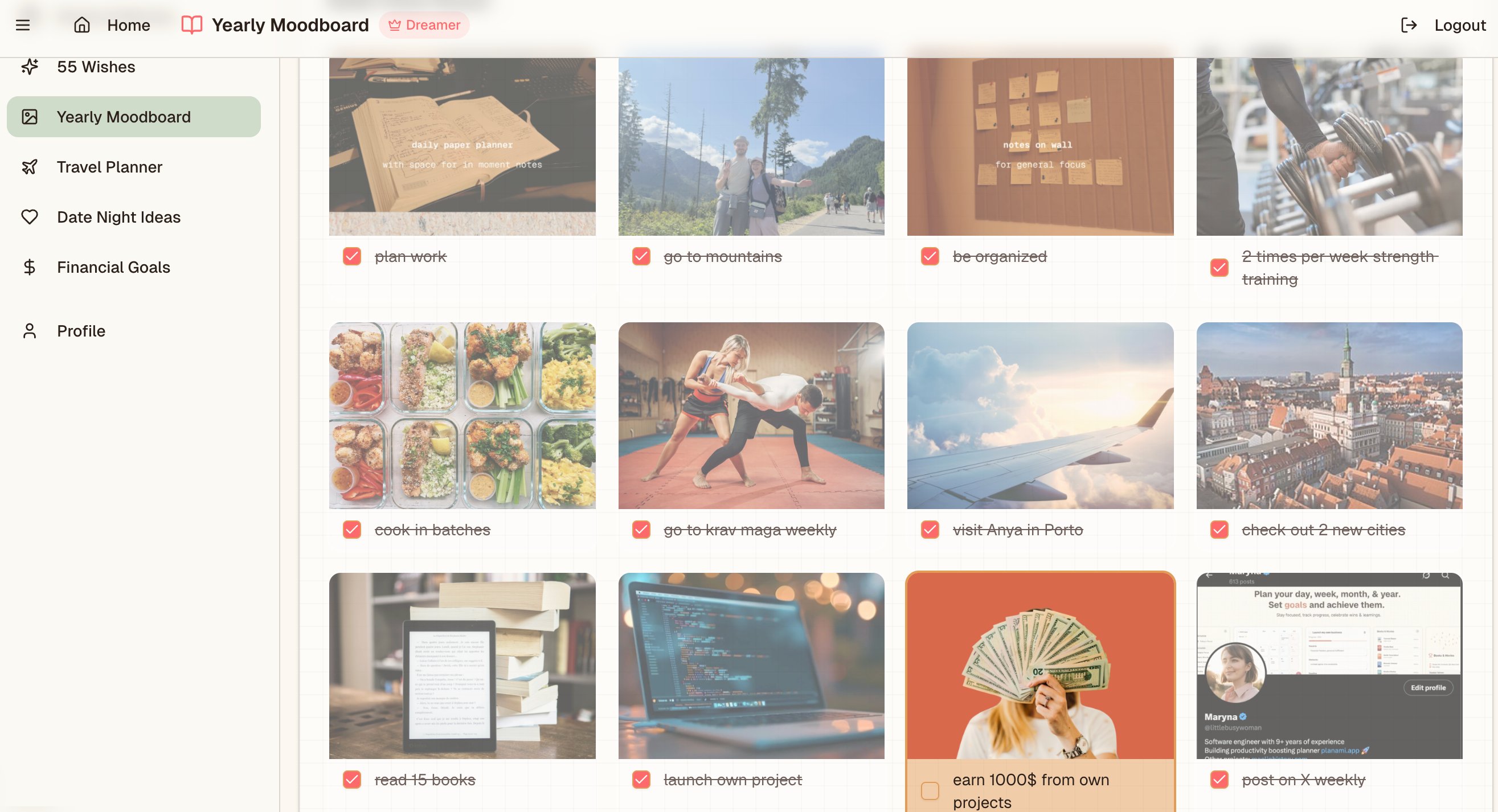
That's exactly how the moodboard and goals work together in Planami: you collect the vision that inspires you, then turn each piece into goals, steps, and scheduled actions — so your dreams quietly become things you're actually doing. (If you want the inspiring side in more depth, see how a moodboard helps you achieve your goals.)
Sources
- Oettingen, G. — research on positive fantasies and mental contrasting (WOOP): overview of mental contrasting
- Gollwitzer & Sheeran (2006) — Implementation intentions meta-analysis: overview