From Travel Dreams to Real Trips: How to Plan Travel Inside Your Life Planner
Most travel planning either lives in scattered browser tabs or never leaves your head. Here's how keeping a travel wishlist and trip details inside your planner turns travel dreams into actual plans.
Travel dreams have a predictable lifecycle. You read about a place, feel that pull, open a tab, save a link. Maybe you create a note. Weeks pass. The tab closes or the note gets buried. The trip never happens — not because you didn't want it, but because wanting wasn't enough. You needed a plan, and a plan needs a place to live.
This is a small problem with a simple solution: keep your travel wishlist and trip plans in the same place as the rest of your life planning.
Why travel plans disappear
The problem isn't that you're not organized enough or not committed enough. It's that travel planning is split across too many surfaces. The inspiration lives on Instagram or a travel blog. The logistics research lives in browser tabs. The dates live in a calendar. The packing list lives on a sticky note. And somewhere in the middle of this, the actual desire to go — the thing that started all of it — gets lost.
When travel lives in fragments, it never becomes a plan. It stays a wish. And wishes, unlike plans, don't have start dates.
The difference between a wishlist and a plan
Not every travel dream needs to become an immediate booking. Some trips are years away. Some are contingent on other things — a career change, a financial goal, a season of life. That's fine, and it's part of why a dedicated travel wishlist is valuable separate from your active trip planning.
A travel wishlist is where you capture the pull — the place, the idea, the feeling you want to have. It's a held intention. You're not committing to a date yet, but you're not losing the idea either. When you're planning a quarterly review or a year-ahead reflection, you can look at your wishlist and ask: is this still something I want? Is now the right time to move one of these into an actual plan?
An active trip plan is different. It has dates, practical details, rough costs, and a role in your calendar. Once a dream becomes a plan, it earns a place next to your other commitments — and because it's in the same planner as your habits, goals, and weekly reviews, it actually stays visible instead of drifting to a browser tab.
How Planami's travel planner works
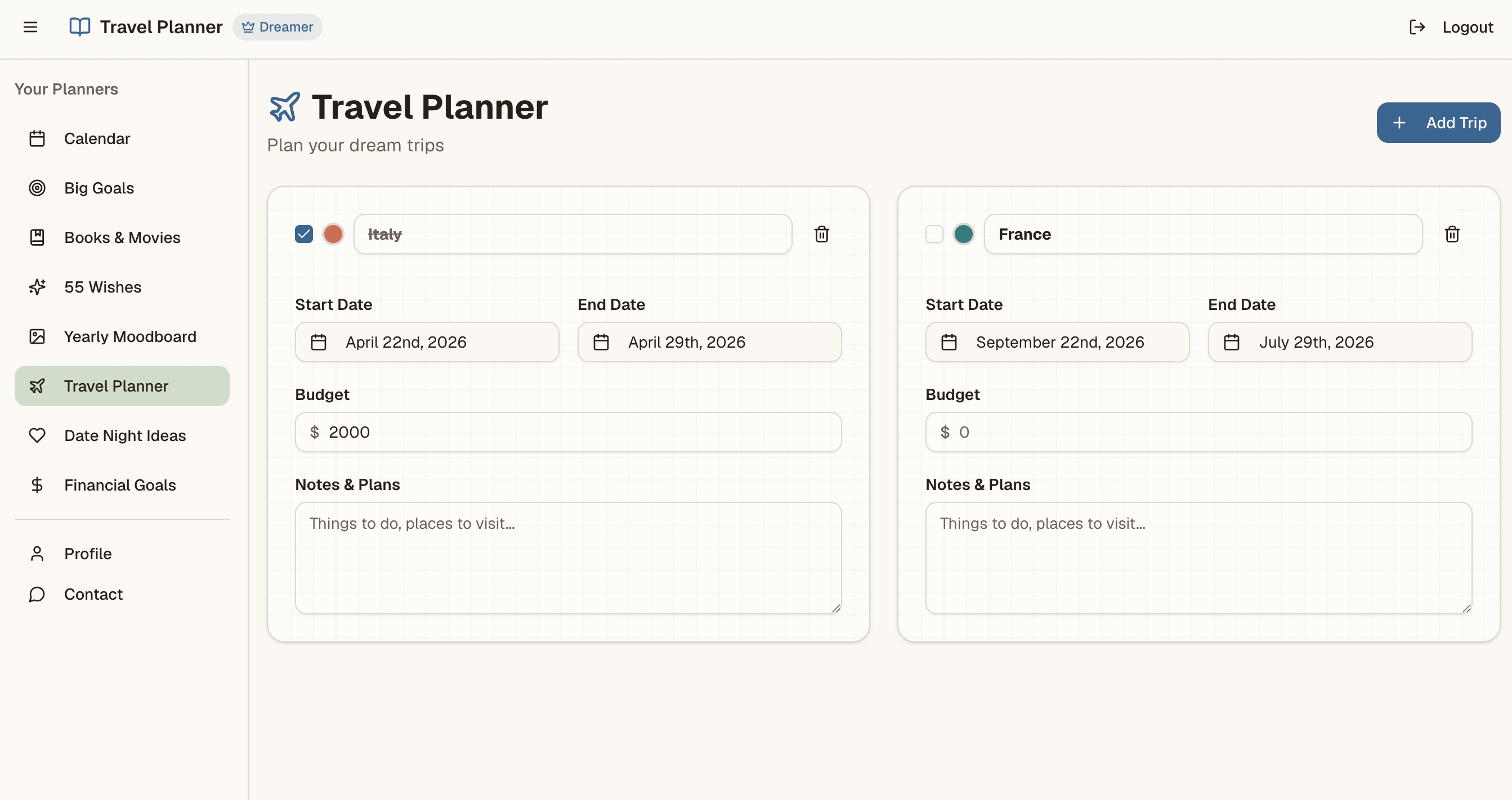
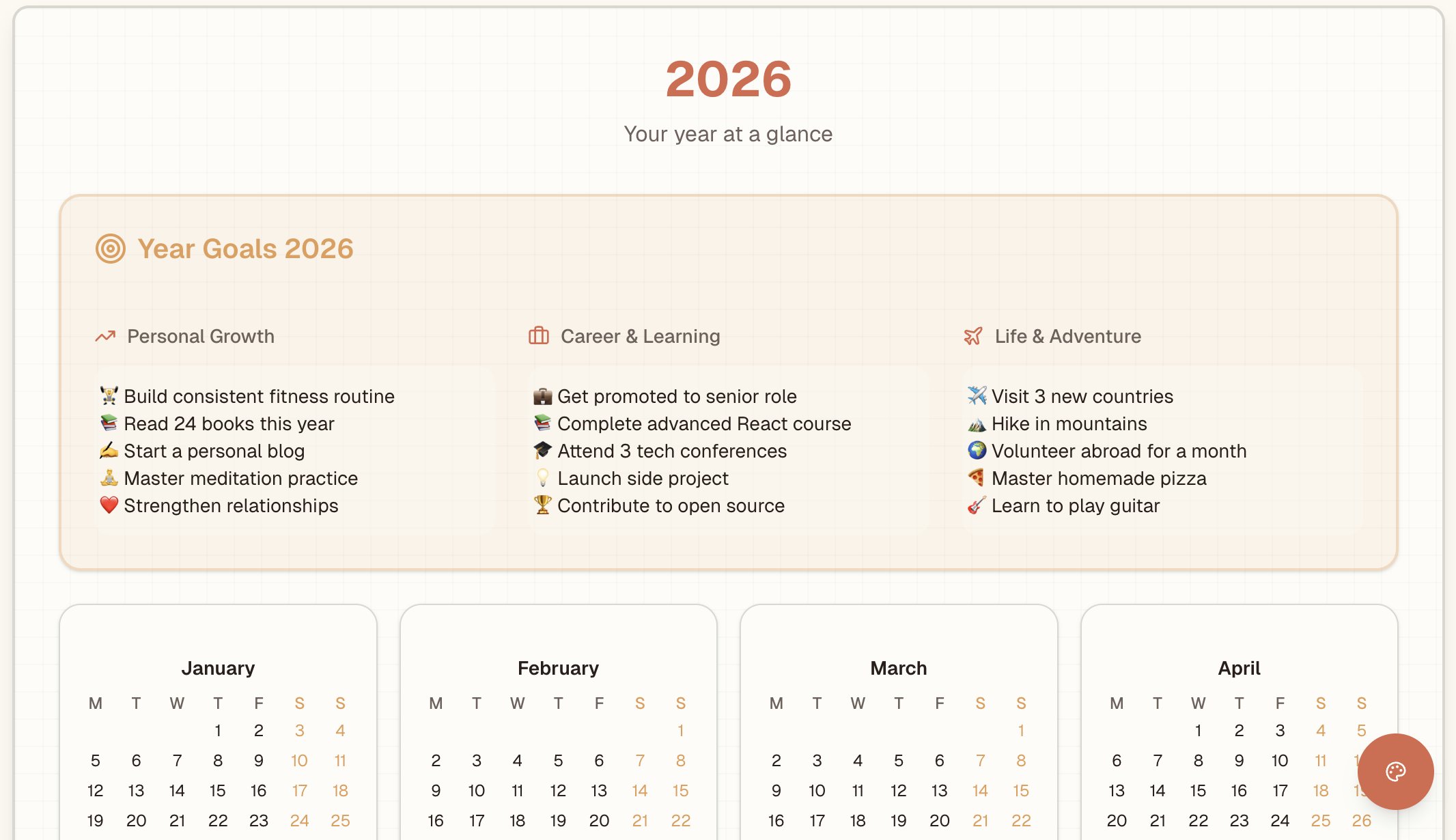
In Planami, the Travel module is a dedicated space for both your wishlist and your active trips. You can add destinations with dates and notes, keep your travel intentions visible alongside the rest of your planning, and return to them when your monthly or yearly review prompts you to think about what you want the coming months to look like.
It's intentionally simple. This isn't a booking engine or an itinerary builder — it's a place for your travel life to exist inside your planning life, so the two stop being separate things.
A different way to think about travel goals
Travel fits naturally into life goal planning: it's a mix of financial goals (saving for a trip), time goals (blocking the calendar), experience goals (seeing a place before a milestone birthday), and sometimes relationship goals (finally taking that trip with a friend or partner you've been postponing).
When travel lives next to your other goals and intentions — rather than in a folder called "someday" — it gets the same honest scrutiny as everything else. Is this trip something I actually want to do in the next year? What would it take to make it real? What's genuinely in the way, and what's just inertia?
Most postponed trips are inertia. Give the dream a fixed home in your planner, and the inertia has less room to operate.
A simple place to start
Before you plan a single trip, open your planner and write down every destination you've thought about in the last year. Not just "Europe someday" — actual places: a specific city, a hiking trail, a coast, a friend's country you've never visited. Get them out of your head and onto the page.
That's your travel wishlist. Now you have something to work with instead of something to vaguely feel guilty about never doing.
Pick one. Give it a rough year. Now you have a travel goal instead of a travel dream.