Why Your Life Goals Need Their Own Space (Not a To-Do List)
Life goals get lost in task managers because they move at a different pace. Here's how keeping them separate — and visible — changes what you actually accomplish.
At some point, most motivated people try to keep their life goals in a task manager. It seems logical: a goal is just a big task, right? Except it doesn't work. The goal sits there, untouched, while you work through your actual tasks. Eventually you stop seeing it. Eventually it disappears. Not because you gave up — because it was in the wrong place.
Life goals and daily tasks move at completely different speeds. Keeping them in the same list is like keeping your five-year plan and your grocery list in the same notebook. They're both valid. They just create noise for each other.
What happens when goals live in your task list
Task managers are built for completion. Everything in them carries an implicit pressure: this should be done, and it isn't yet. That's useful for tasks. For life goals — things like "build a business," "buy a home," "write a book," "be more present with my family" — that completion pressure is exactly wrong.
Life goals don't get checked off in a week. They grow over years. They need to be seen and reconsidered, not ticked. When they live in a task manager, they become either a nagging guilt item (undone, always undone) or an aspirational placeholder that you stop looking at. Neither moves you forward.
What a dedicated goal space actually does
When your life goals have their own section — separate from tasks, separate from your daily entries, but still connected to your planning system — a few things change.
You look at them differently. A life goal in its own space isn't asking to be completed today. It's asking to be considered. That's a different relationship: calmer, longer-range, more reflective. You can read your goal, feel its pull, and then go decide how this week or this month will move toward it.
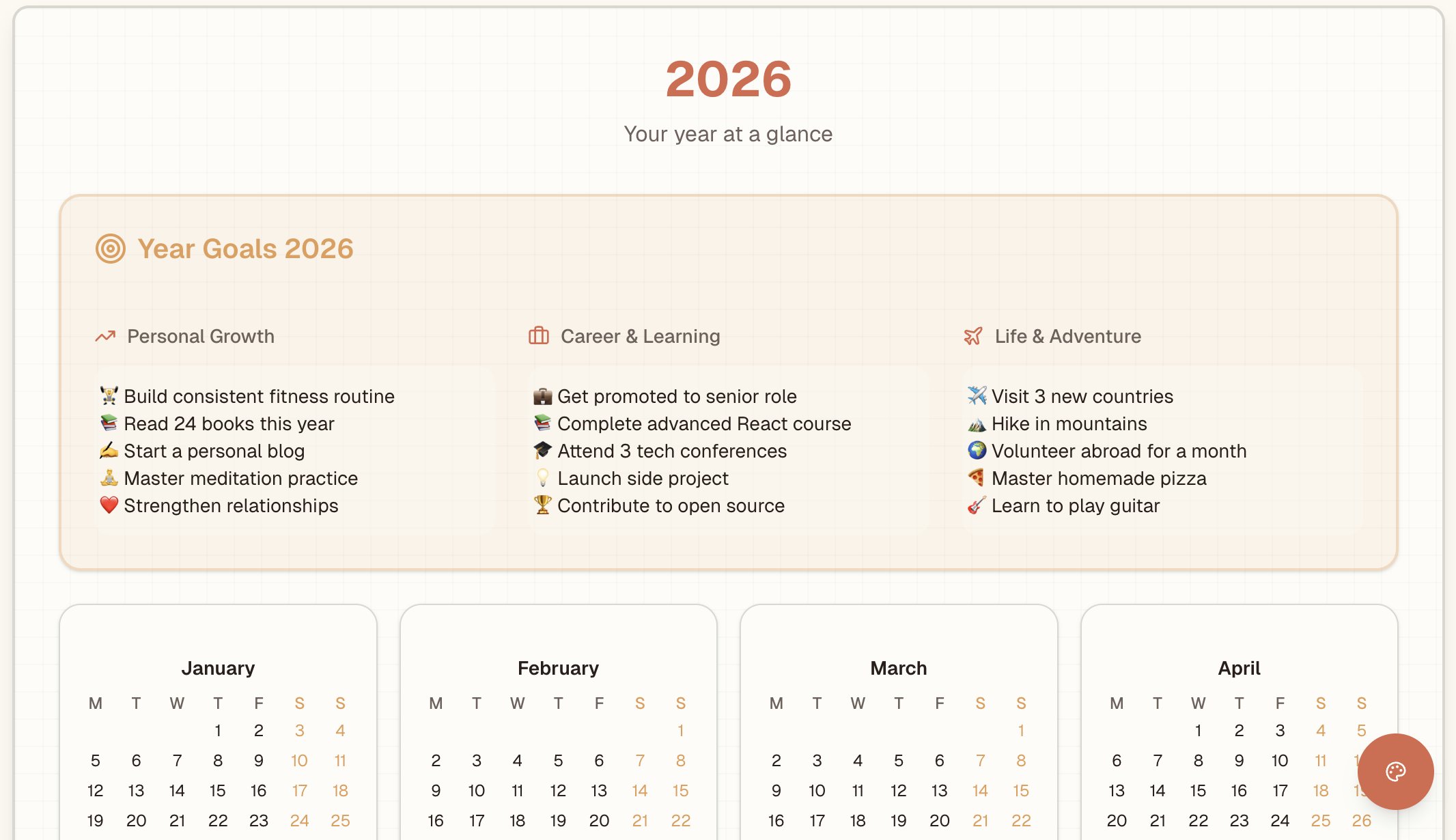
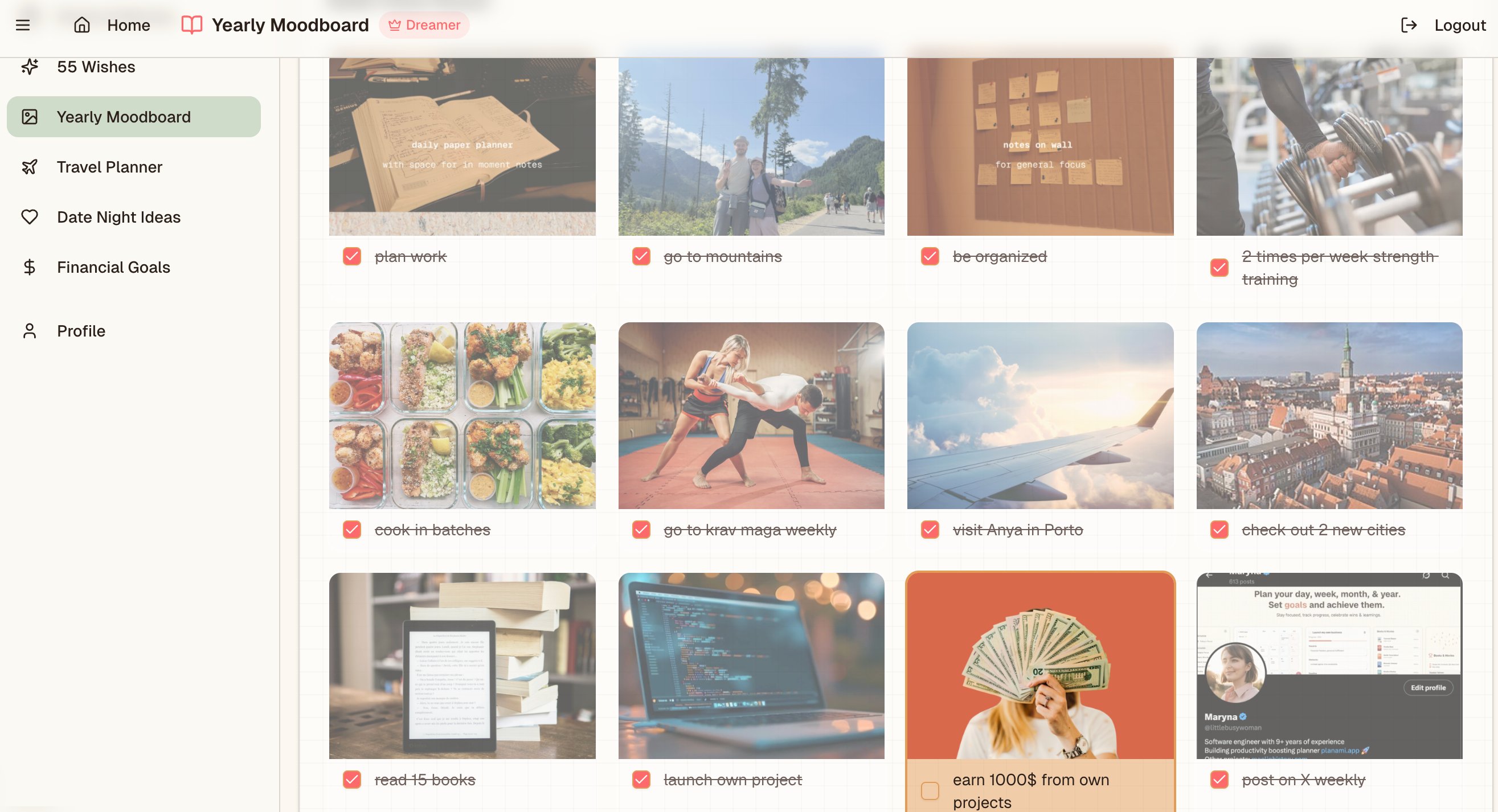
You see the full picture. Most people have goals across several areas at once: career, health, relationships, finances, learning, creative projects. When all of those live together in one view — not mixed into different task lists or scattered across old notes — you can see where your attention is actually going. And where it isn't.
You make better weekly decisions. When you sit down to plan your week and your life goals are one click away, you can ask: does anything I'm scheduling this week connect to what I actually care about long-term? Without that check, it's surprisingly easy to be extremely busy and making no progress on anything that matters.
How Planami's life goals module works
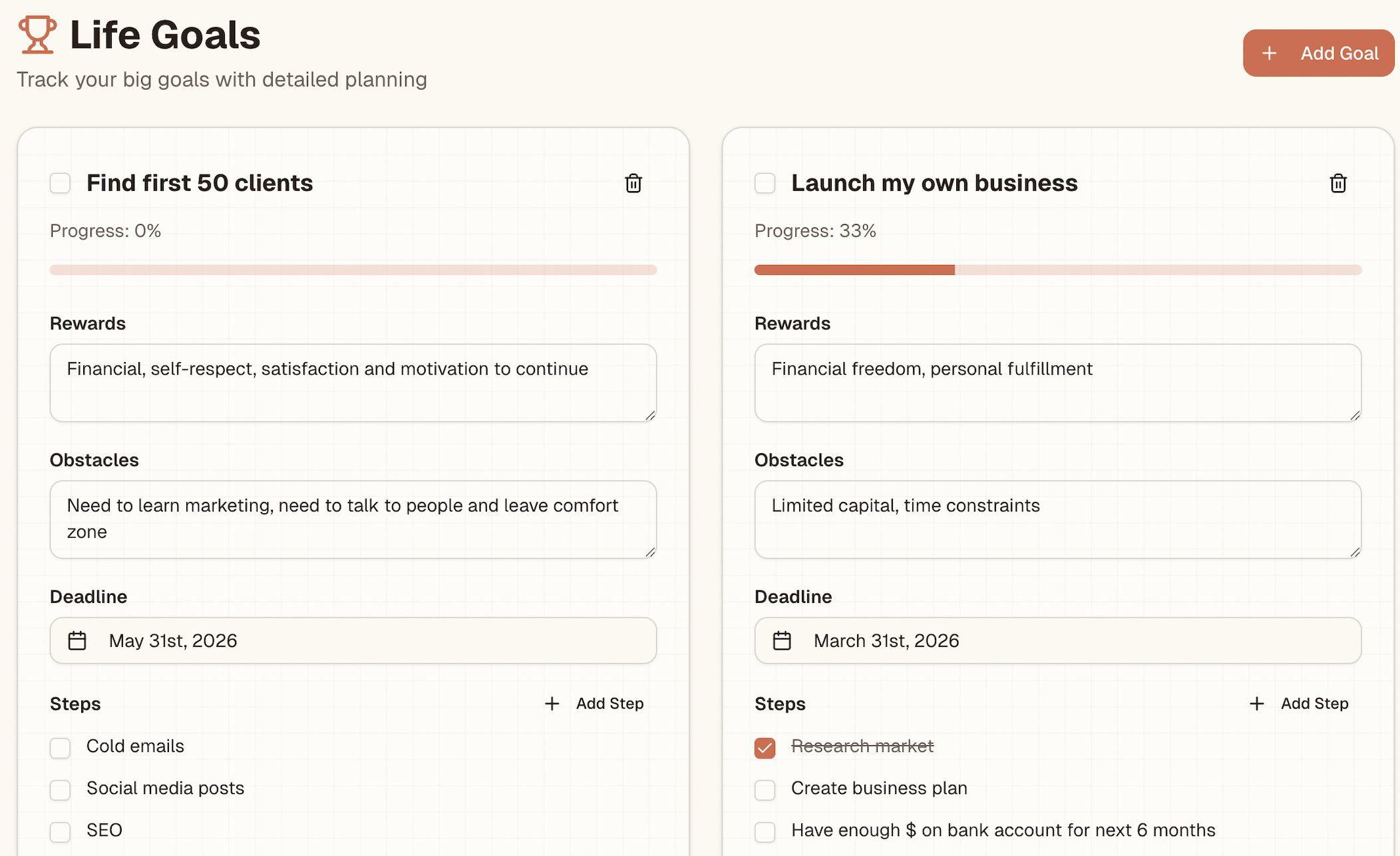
In Planami, the Life Goals module is a dedicated space inside your planner — separate from your daily, weekly, monthly, and yearly calendar views, but accessible from the same sidebar at any time.
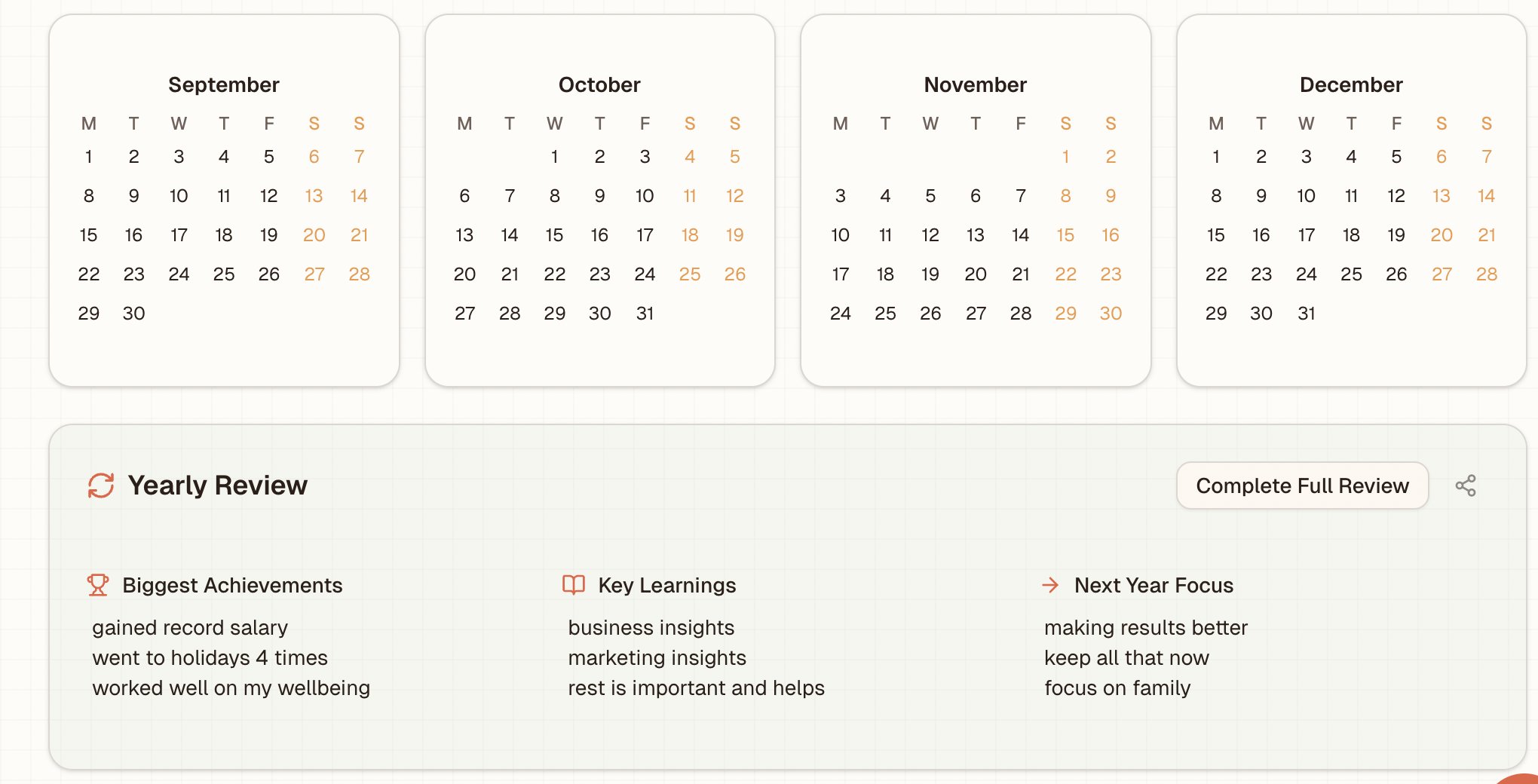
You can add goals across different areas of your life, give each one a description and a sense of what progress looks like, and return to them regularly without them cluttering your daily task view. During a weekly or monthly review, you can pull up your goals alongside your planner entries and make honest decisions about whether your weeks are connected to your direction.
The goal isn't to turn your life into a productivity project. It's to make sure that the things you actually care about don't disappear behind the noise of what's urgent.
A practical way to start
If you've never kept your life goals in a dedicated space before, start with a short list — no more than five goals across the areas that matter most to you right now. Don't try to capture everything. Just the things that, if they happened in the next two to three years, would make you feel like your life moved in a meaningful direction.
Write them down in one place. Look at them once a week during your weekly review. Ask one question each time: did anything I did this week move any of these forward?
That's it. The discipline isn't in the goal-setting session. It's in the quiet, regular practice of keeping your direction visible while life happens around it.