You did more than you think: how to actually see your progress
Feeling busy but never accomplished is usually not a productivity problem — it's a visibility problem. Here's why you can't see your wins, and how to fix it.
I used to end almost every day with the same hollow feeling: I'd been busy from morning to night, and yet I couldn't point to a single thing I'd actually accomplished. For a long time I assumed I needed to do more. It turned out I needed to see more. The problem wasn't my output — it was that my wins were invisible.
This is one of the most common and most demoralizing traps in modern life. You work hard, you stay busy, and still you feel like you're falling behind. Not because you aren't making progress, but because nothing is showing it back to you.
Why your brain hides your wins
Your mind has a strong negativity bias: unfinished tasks and small failures stick, while completed work quietly evaporates. The moment you finish something, your attention jumps to the next open item. So your to-do list — a running record of what you haven't done — becomes the story you tell yourself about your day. No wonder it feels like you're never enough.
The catch is that progress, not perfection, is what actually keeps us motivated. In a landmark study, researchers analyzed more than 12,000 daily diary entries from people at work and found that nothing improved motivation and mood more than making progress in meaningful work. They called it the progress principle. The flip side is just as true: setbacks, and the feeling of going nowhere, were the biggest triggers of a bad day.
In other words: if you can't see your progress, you lose the single most powerful source of motivation you have — even when the progress is really happening.
How to make your progress visible
Keep a "done" list, not just a to-do list
At the end of the day, jot down what you actually did — including the unplanned things. Helped a colleague, handled a hard conversation, finally booked that appointment. A done list flips your attention from the gap to the gain.
Name a few wins every week
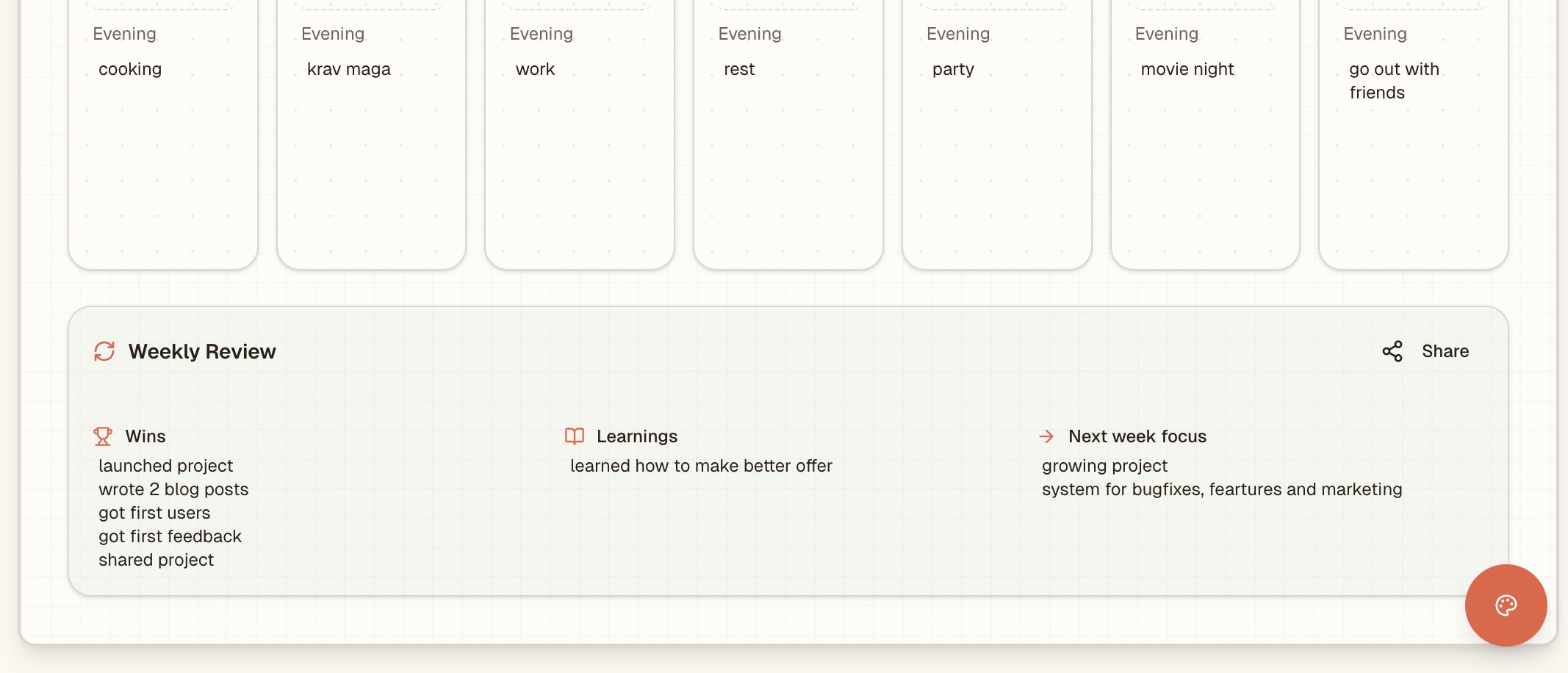
Once a week, look back and write two or three things that went well. Small counts. The point isn't to brag to anyone — it's to let yourself register that you're moving, which is exactly what fuels the next week.
Zoom out on a regular rhythm
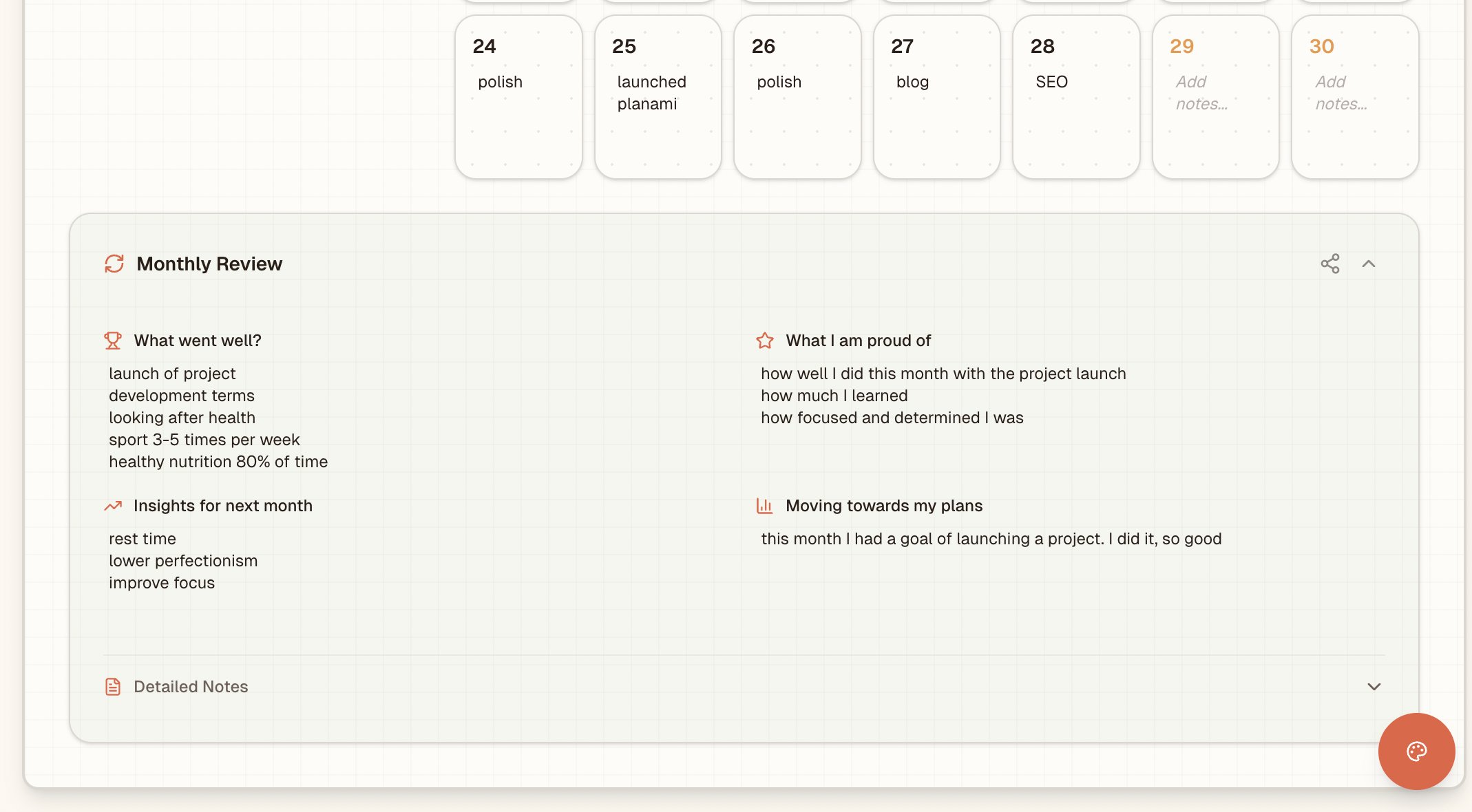
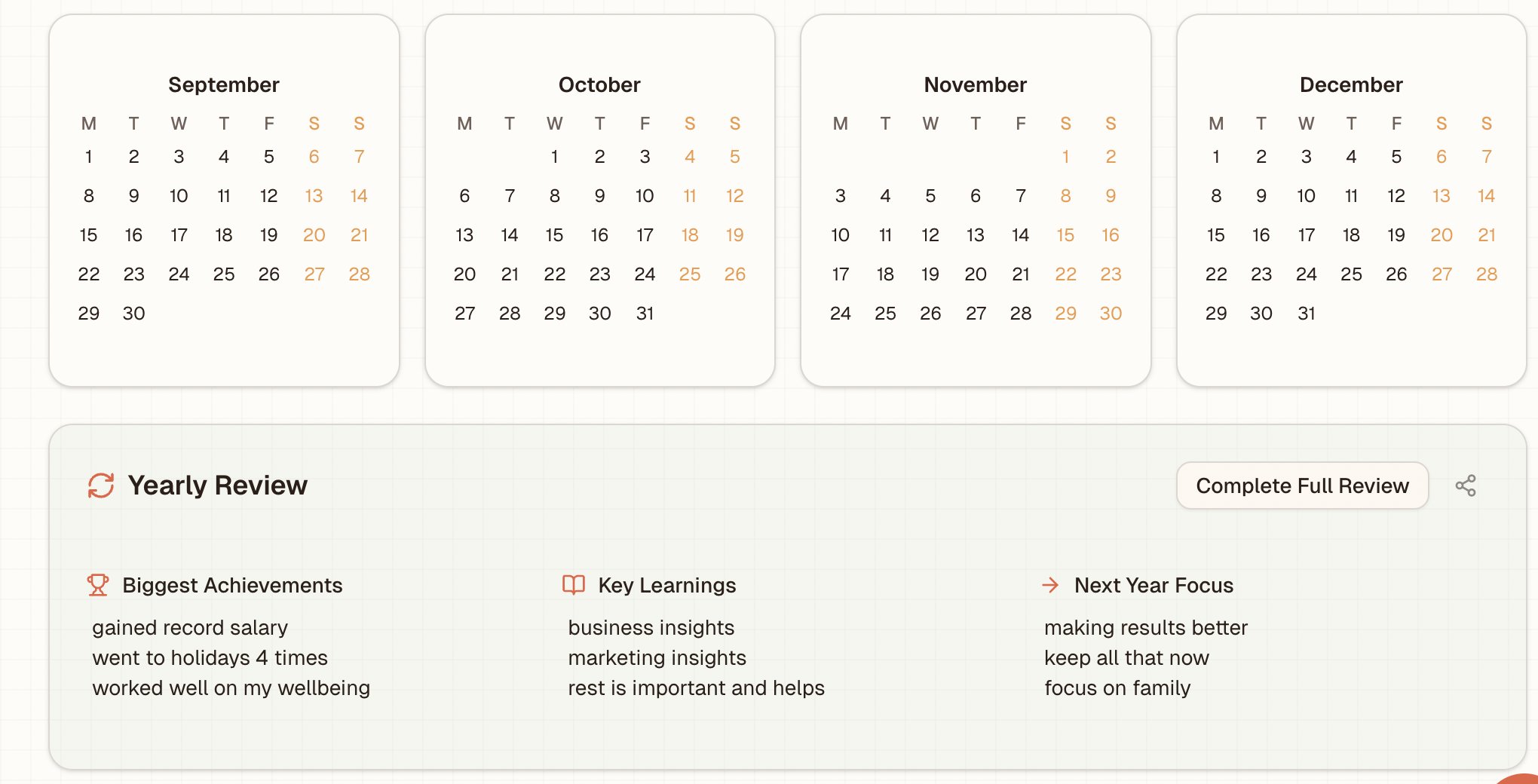
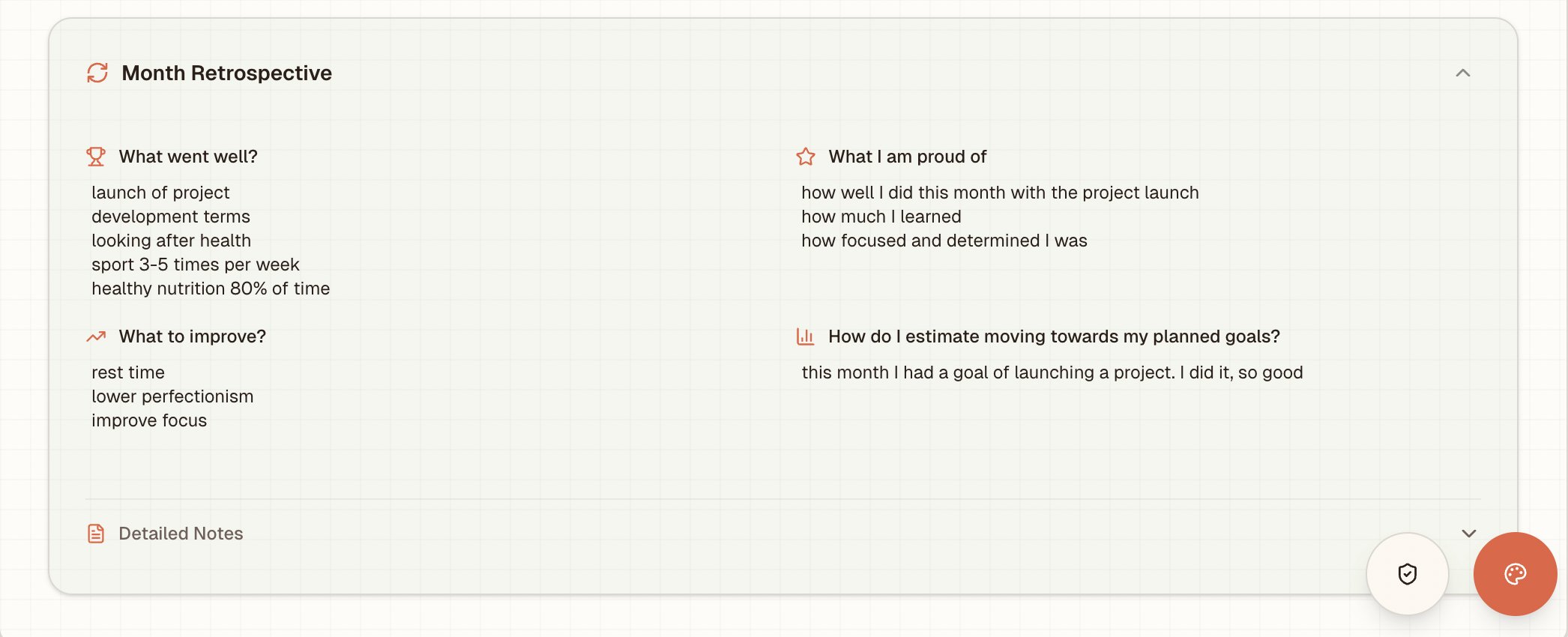
A single day can feel like nothing. A month of days, seen together, tells a completely different story. Reviewing your weeks and months is what turns scattered effort into a visible arc of growth — and reflecting on it has even been shown to improve how you perform next.
Track the inputs you care about
Mood, habits, gratitude, energy — gentle things you can glance back on. Over time they reveal patterns you'd never notice day to day, and they prove to you that you've been showing up.
Seeing your wins is not vanity — it's fuel
This isn't about toxic positivity or pretending everything is great. It's about correcting a genuine blind spot. You are almost certainly doing more than you think; you just have no record of it. Give yourself that record and the constant low-grade feeling of "not enough" starts to lift.
This is exactly why I built reflection into the heart of Planami. Your wins, your habits, and your progress are captured as you go, so when you look back — at a week, a month, or a whole year — you finally see the truth: you did more than you think. Start free and see your own progress in your first week.
Sources
- Amabile & Kramer — "The Power of Small Wins" and The Progress Principle, Harvard Business School: read the article
- Di Stefano, Gino, Pisano & Staats — "Learning by Thinking," Harvard Business School: read the paper