Paper planner vs digital planner: which one actually works for you?
Paper planners are calming and satisfying to write in. Digital planners are searchable, synced, and always with you. Most comparisons tell you to pick one. Here's a more honest look at when each actually helps — and when a hybrid approach works better than either.
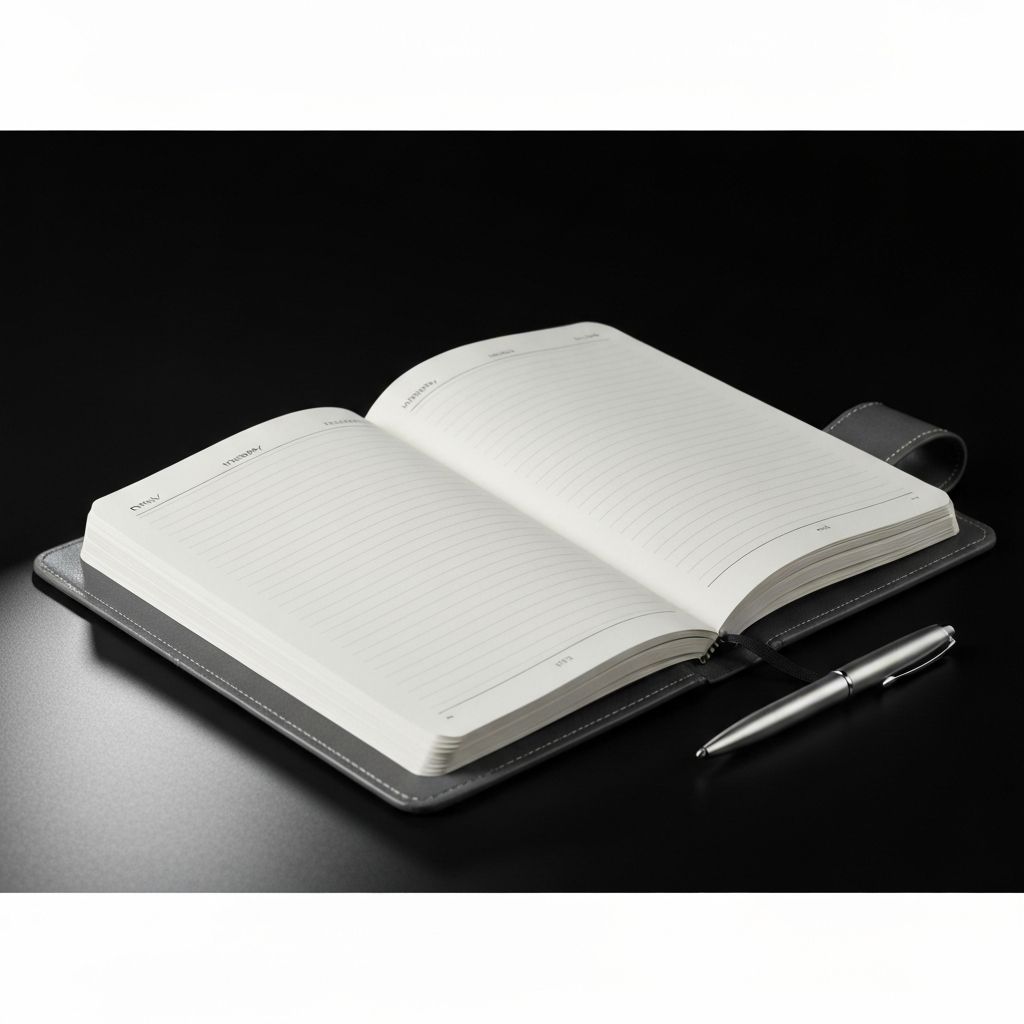
If you love paper planners, you already know what makes them good: the slow satisfaction of writing by hand, the visual overview of a full spread, the way a physical object makes plans feel real. If you're tired of them, you also know what makes them hard: you can't search a notebook, plans live in a drawer when you need them on your phone, and a sticker on Tuesday doesn't know what Wednesday looks like.
This isn't a "paper vs. digital" battle with a winner. It's a genuine tradeoff, and the right answer depends on how you actually work — not on what productivity influencers say works in general.
What paper planners genuinely do better
Writing by hand aids memory and thinking
This one has real evidence behind it. Research comparing note-taking by hand versus typing consistently finds that handwriting leads to better retention and deeper understanding — partly because the slower pace forces you to summarize and rephrase rather than transcribe. When you write a goal or plan by hand, you're more likely to encode it, not just log it.
For tasks that need thinking — reflecting on the week, naming your priorities, writing out what's bothering you — paper often produces better output because the friction is useful. Slowing down is the point.
Paper is distraction-free by default
A notebook doesn't have notifications. It doesn't suggest "similar content" or redirect you to an app. The physical act of opening a planner is a small ritual that signals "I'm planning now," which is harder to replicate on a device you also use for email and social media.
The tactile, visual experience is genuinely satisfying
There's real joy in a well-laid-out spread — coloring in habit trackers, decorating pages, flipping back through the year. For people who find the planning process itself motivating, paper delivers something that most digital tools simply don't. Aesthetics aren't trivial when they're the thing that gets you to show up consistently.
What digital planners do better
Your plan is always with you
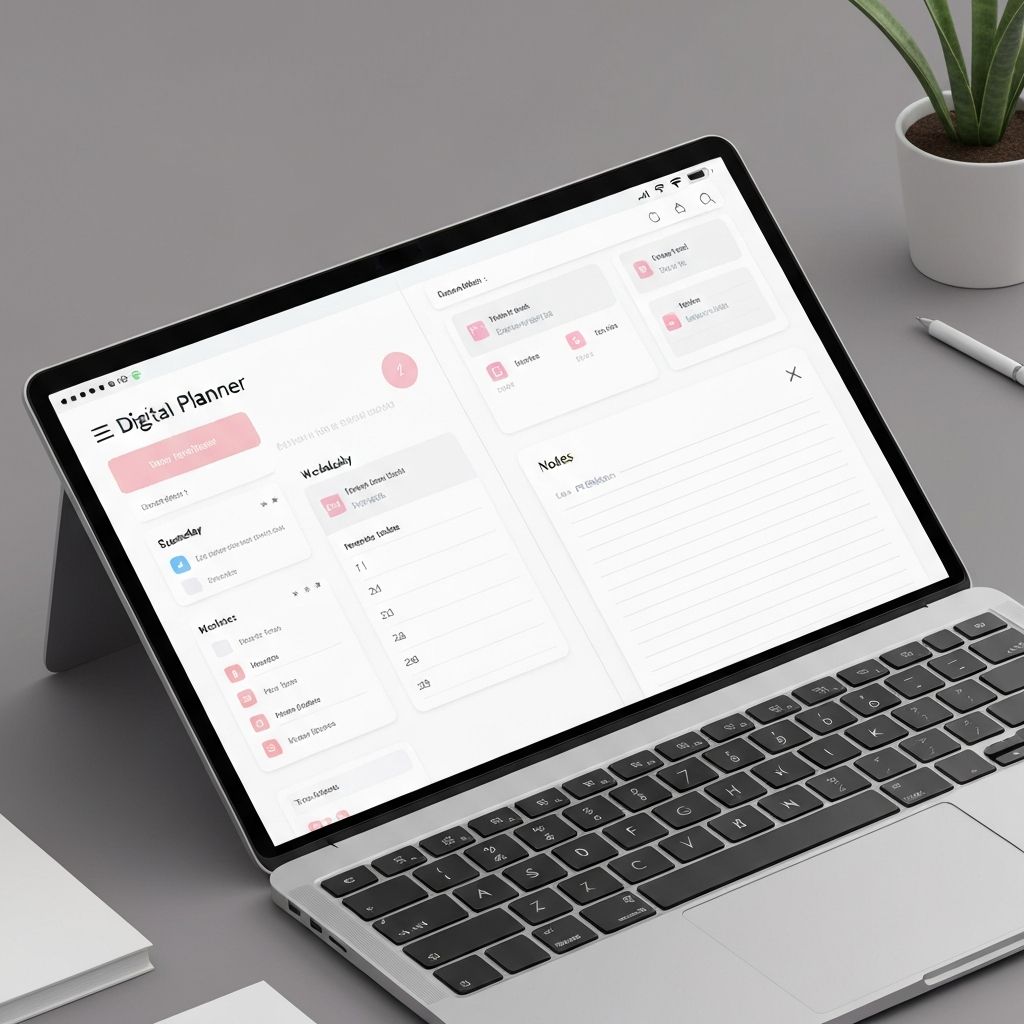
The biggest practical problem with paper is that it stays wherever you left it. If you plan on paper Sunday evening and need to check something Monday afternoon, you either carry the notebook everywhere or accept the gap. Digital planners travel with your phone, sync across devices, and surface the right information when you need it — not when you're at your desk.
Digital plans can connect across time
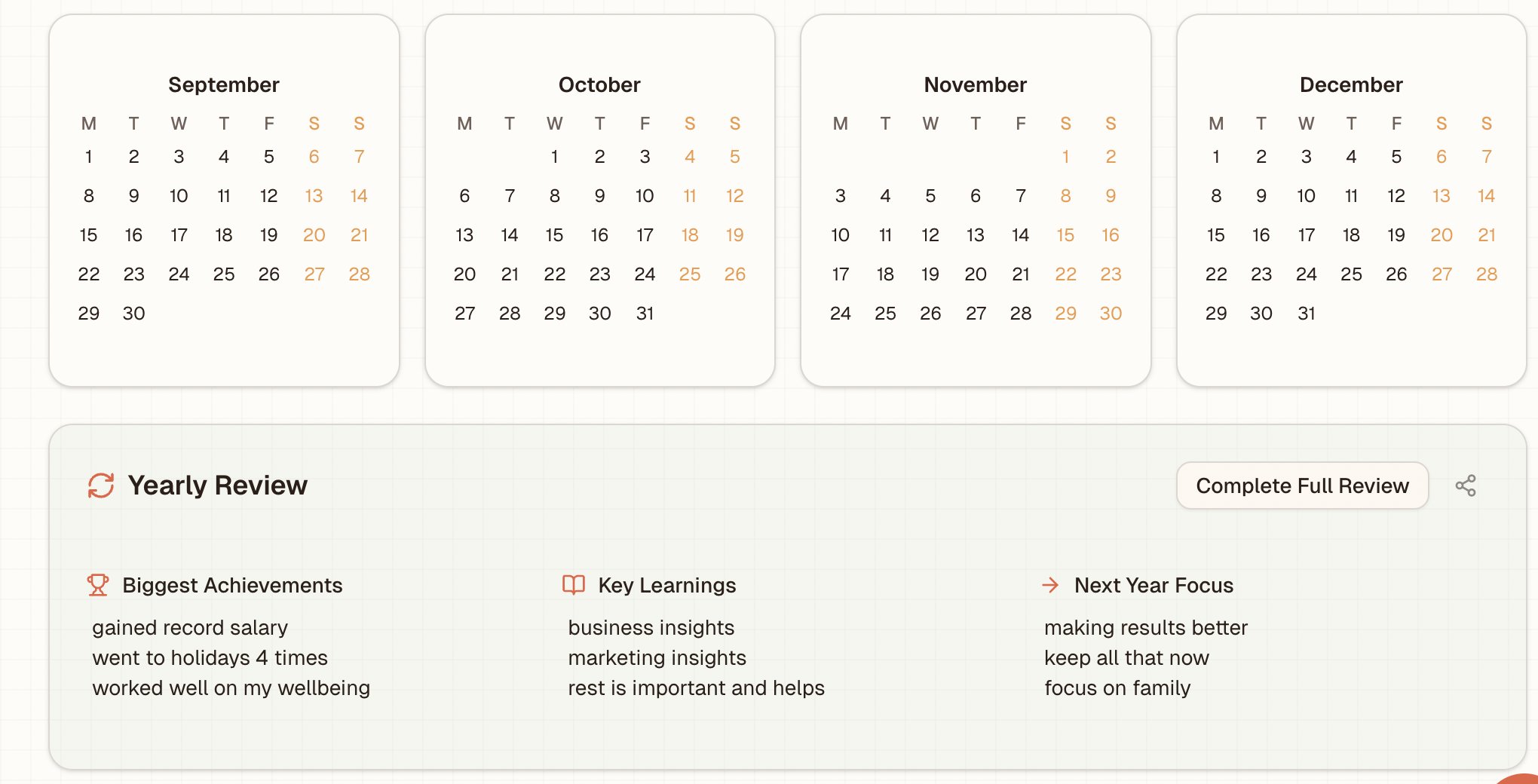
A paper notebook can't show you how this week's tasks connect to your yearly goals. Each spread exists in isolation. A digital planner can hold your year, your month, your week, and your day in one connected system — so you can zoom out to see the big picture or zoom in to today without losing the thread.
You can search, sort, and find things
When you want to find that goal you set in February, or the habit you were tracking in September, or the note you left yourself about a trip — a digital tool lets you search. A paper planner asks you to remember which notebook and which page it was on.
Retrospectives are built in
Paper planners encourage you to write, but they rarely help you review. Flipping back through months of handwriting to spot patterns takes real effort and is easy to skip. A digital planner can surface your past entries in context — this month versus last month, this week versus the same week a year ago — so the review practically happens without extra work.
The honest tradeoffs
Paper planners ask for more of you upfront: you have to carry them, maintain them, and re-copy information that changes. In return, they give you something slower, more tactile, and more focused.
Digital planners ask for less friction in the logistics — everything is searchable and synced — but they live on devices that compete for your attention. The best digital planner tools try to solve this with a calm, distraction-free design rather than the busy dashboard approach of most productivity apps.
The failure mode of paper: plans stay beautifully organized in a book you stop checking by February.
The failure mode of digital: everything ends up in one more open tab, buried under notifications, used as another task-dumping app rather than a real planning space.
When to use paper, when to use digital, and when to use both
Use paper when you need to think. Reflection, brainstorming, journaling, morning pages — anything that benefits from slowness and tactile focus. Paper is excellent for the moments where the act of writing is itself part of the work.
Use digital when you need access and structure. Goals, schedules, recurring plans, anything that needs to connect across weeks or months, anything you'll want to search or review over time.
Use both with a clear handoff. Many people find a hybrid works well: paper for daily notes and morning thinking, digital for the structured plan that paper notes feed into. The key is a simple rule for what lives where — otherwise you end up with split attention and two incomplete systems instead of one complete one.
If you love paper but want to try digital
The most common failure point in switching from paper to digital isn't motivation — it's picking a tool that doesn't feel like a planner. Most note-taking or task apps require significant setup before you can actually plan. They're systems you build rather than planners you use.
If you want a digital planner that keeps the calm, focused feel of a paper one — without the setup tax — Planami is built specifically for that. It connects a year view, monthly review, weekly plan, and daily page in one space, with built-in reflection prompts, and a paper-like calm by design. You can be planning the moment you open it, not after you've built a template.
The best planner is the one you'll actually use. If that's paper, use paper. If it's digital, use digital. If it's both with clear rules, use both. The goal isn't the tool — it's the plan.
Sources
- Mueller & Oppenheimer (2014) — "The Pen Is Mightier Than the Keyboard," Psychological Science: read the paper
- Harkin et al. (2016) — Monitoring goal progress meta-analysis, Psychological Bulletin: overview