*I don't know what to do next* problem and how to fix it
Not sure where to start with all the things you need to do? Here's a simple solution to help you overcome the overwhelm of endless to-do lists.
For the last couple of years, I've been the person who wakes up, opens my to-do list, sees 47 things I need to do, and immediately feels paralyzed. My brain shuts down. I scroll social media instead. I clean my desk. I do anything except the thing I'm supposed to do.
Recognized yourself? Our brains are weird. When we see too many options, we freeze. It's called decision paralysis, and it's why most of us procrastinate.
Here's What Research Shows
The science behind decision paralysis is clear, and understanding it can help you break free from the cycle of overwhelm:
- Decision fatigue is real: Every choice we make depletes mental energy. By the time we've decided what to work on, we're too tired to actually do it. Research shows that our ability to make good decisions deteriorates throughout the day as we use up our mental resources.
- Cognitive overload: Our working memory can only hold 3-5 items. When we see 20+ tasks, our brain can't process them all, so it shuts down. This isn't a personal failing — it's a biological limitation. Your brain literally cannot handle that much information at once.
- The paradox of choice: More options don't make us happier or more productive. They make us anxious and less likely to act. Studies show that when faced with too many choices, we're more likely to avoid making any decision at all.
The Best Solution: 3 Daily Priorities
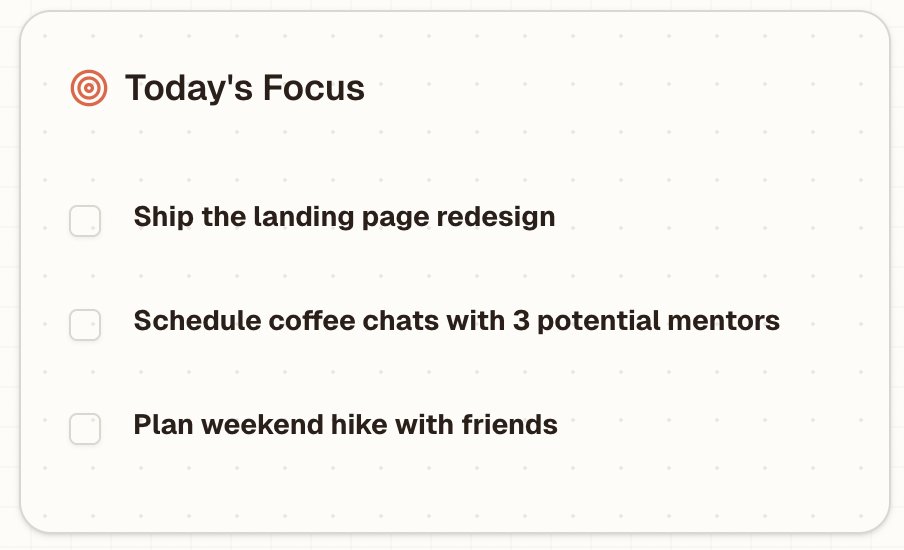
I started writing just 3 things to focus on each day. Not 3 categories. Not 3 projects. Just 3 specific, actionable things. And I implemented it in Planami too.
Here's what changed:
No More Decision Paralysis
The decision is made the night before (or morning of). I wake up and know exactly what to do. No scrolling through lists. No "what should I work on?" Just: do priority 1, then 2, then 3.
This simple shift eliminates the mental energy drain of decision-making. When you've already decided what matters most, you can channel all your energy into actually doing the work, not choosing what work to do.
Reduced Cognitive Load
My brain can handle 3 things. It can't handle 47. When I only see 3 priorities, I'm not overwhelmed. I can actually start.
This isn't about being lazy or avoiding work — it's about working with your brain's natural limitations instead of against them. When you respect your cognitive capacity, you can focus deeply and produce better results.
Momentum Builds
When I finish priority 1, I feel accomplished. That dopamine hit makes me want to do priority 2. Then 3. By the time I'm done, I've built momentum and can tackle other things, if I need to.
This is the power of small wins. Each completed priority reinforces your sense of progress and capability. Instead of feeling like you're never doing enough, you feel like you're consistently moving forward.
Progress Compounds
3 focused things per day doesn't sound like much. But 3 things × 5 days = 15 things per week. 15 things × 4 weeks = 60 things per month. That's how big goals get done: by doing 3 things consistently instead of doing everything at once.
This is the compound effect in action. Small, consistent actions create exponential results over time. You're not trying to do everything — you're doing the right things, consistently.
Less Guilt, More Action
When I had 47 things on my list, I'd do 5 and feel like a failure. Now I do 3 and feel accomplished. That positive reinforcement keeps me going.
This shift in mindset is crucial. When you set realistic expectations and meet them consistently, you build confidence and momentum. You stop feeling guilty about what you didn't do and start feeling proud of what you did.
Making It Work: Integration With Your Goals
The key is it's integrated with my goals and schedule. My 3 priorities aren't random, they're connected to my bigger goals. So I'm not just checking boxes. I'm making progress on what actually matters.
Here's how to make this work for you:
- Connect to bigger goals: Each of your 3 daily priorities should move you closer to a meaningful goal. If it doesn't connect to something bigger, it might not be a priority.
- Be specific: "Work on project" isn't a priority. "Write the introduction for the quarterly report" is. The more specific you are, the easier it is to start and complete.
- Make it actionable: Your priorities should be things you can actually do, not vague aspirations. "Feel more confident" isn't actionable. "Practice my presentation 3 times" is.
- Review and adjust: At the end of each day, review your 3 priorities. Did you complete them? What worked? What didn't? Use this feedback to improve your planning.
The Tool Doesn't Matter — The Constraint Does
Even a simple piece of paper with 3 things works. The magic isn't the tool — it's the constraint. Our brains need limits to function. But if you feel like you need ready structure, Planami is your choice.
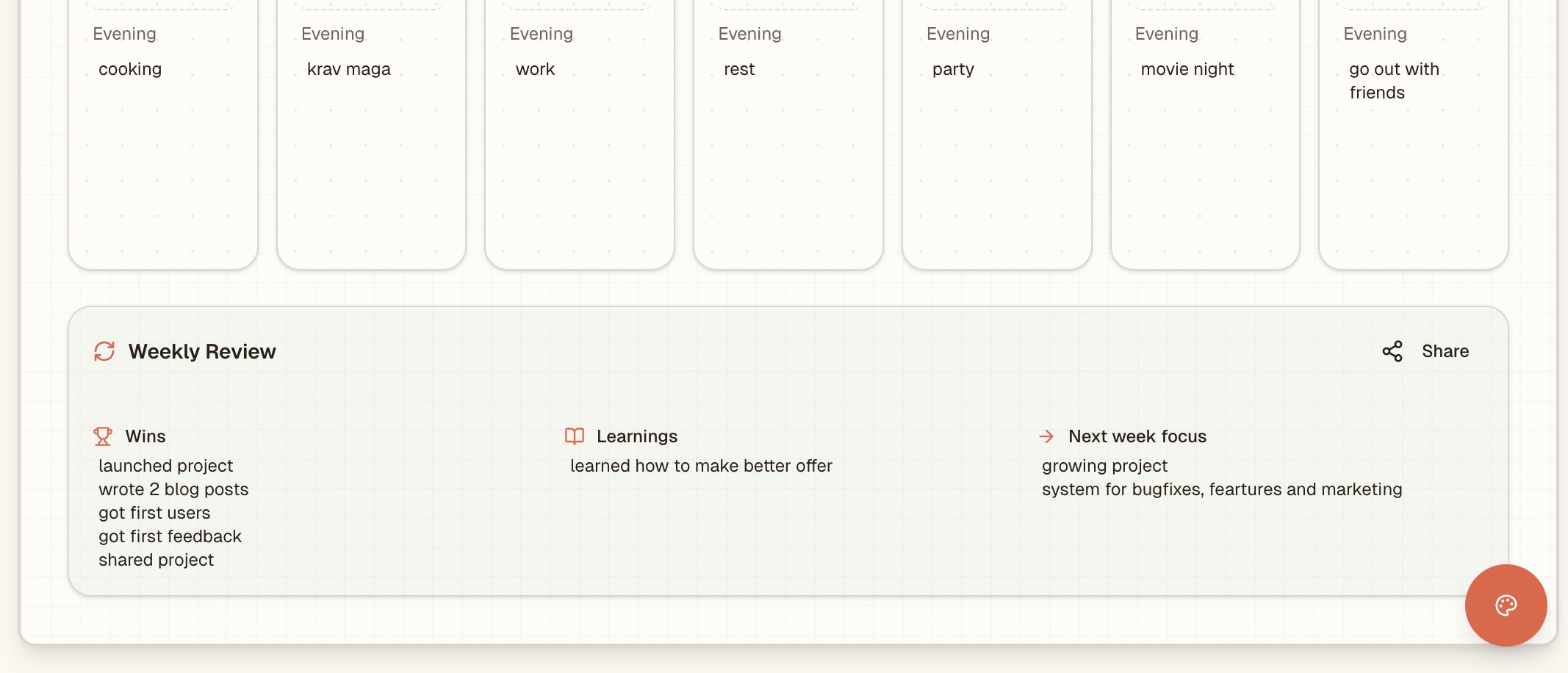
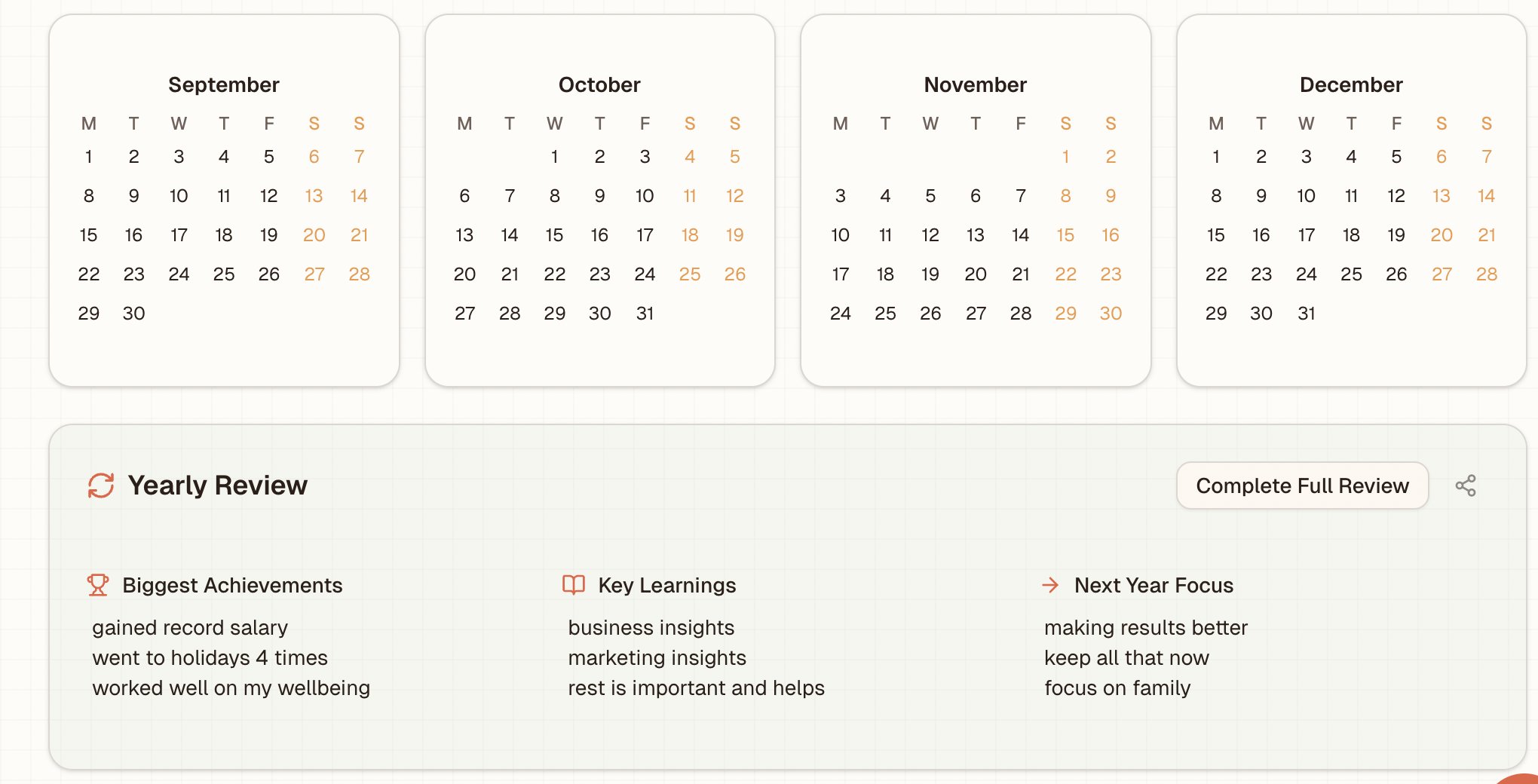
In Planami, you can set your 3 daily priorities right in your daily view. They're connected to your bigger goals, visible throughout your planning, and integrated with your schedule. This makes it easy to see how today's priorities fit into your larger vision.
Start Today
Do you struggle with decision paralysis? Try this: tonight, before you go to bed, write down just 3 things you'll focus on tomorrow. Make them specific. Make them actionable. Make them connected to what matters.
Then tomorrow, wake up and do them. Don't look at your full to-do list. Don't check email first. Just do priority 1, then 2, then 3.
See how it feels. Notice the difference. You might find that 3 focused priorities beat 47 scattered tasks every single time.
And if you want a planning system that makes this easy — that helps you connect your daily priorities to your bigger goals, that gives you the structure without the overwhelm — try Planami. Your brain (and your productivity) will thank you.