Building Habits That Stick
Explore proven techniques for developing lasting habits through structured tracking and reflection.
We all have habits we want to build: exercise more, read daily, meditate, eat healthier. But why do some habits stick while others fade away after a few weeks? The answer lies in understanding how habits actually work and using that knowledge to our advantage.
The Science of Habit Formation
At its core, every habit follows a simple loop: cue, routine, reward. Understanding this loop is the key to building habits that last.
- Cue: The trigger that tells your brain to go into automatic mode (time of day, location, emotional state, other people, or the immediately preceding action)
- Routine: The behavior itself — the actual habit you want to perform
- Reward: The benefit you gain from the habit, which helps your brain remember the loop for the future
When you track these elements, you can identify what's working and what's not. For example, if you're trying to build a morning meditation habit, your cue might be "after I brush my teeth," your routine is "meditate for 5 minutes," and your reward is "feeling calm and centered for the day."
Start Small: The Power of Tiny Habits
One of the biggest mistakes in habit formation is trying to do too much too soon. You might decide to "exercise for an hour every day" or "read for two hours daily," but these ambitious goals often lead to burnout and abandonment.
Instead, start with habits so small they're almost impossible to fail:
- Want to exercise? Start with "do one push-up" or "put on workout clothes"
- Want to read more? Start with "read one page" or "open the book"
- Want to meditate? Start with "take three deep breaths"
These tiny habits build momentum. Once you've done one push-up, you might think, "Well, I'm already here, might as well do a few more." The key is consistency over intensity. It's better to do something small every day than something big once a week.
Stack Your Habits
Habit stacking is a powerful technique where you attach a new habit to an existing one. The formula is simple: "After [existing habit], I will [new habit]."
For example:
- "After I pour my morning coffee, I will write in my gratitude journal"
- "After I finish dinner, I will do the dishes immediately"
- "After I brush my teeth at night, I will read for 10 minutes"
This works because you're using an existing habit as a cue for your new one. Your brain already knows the routine, so adding one more step feels natural rather than forced.
Track Your Progress: The Power of Visibility
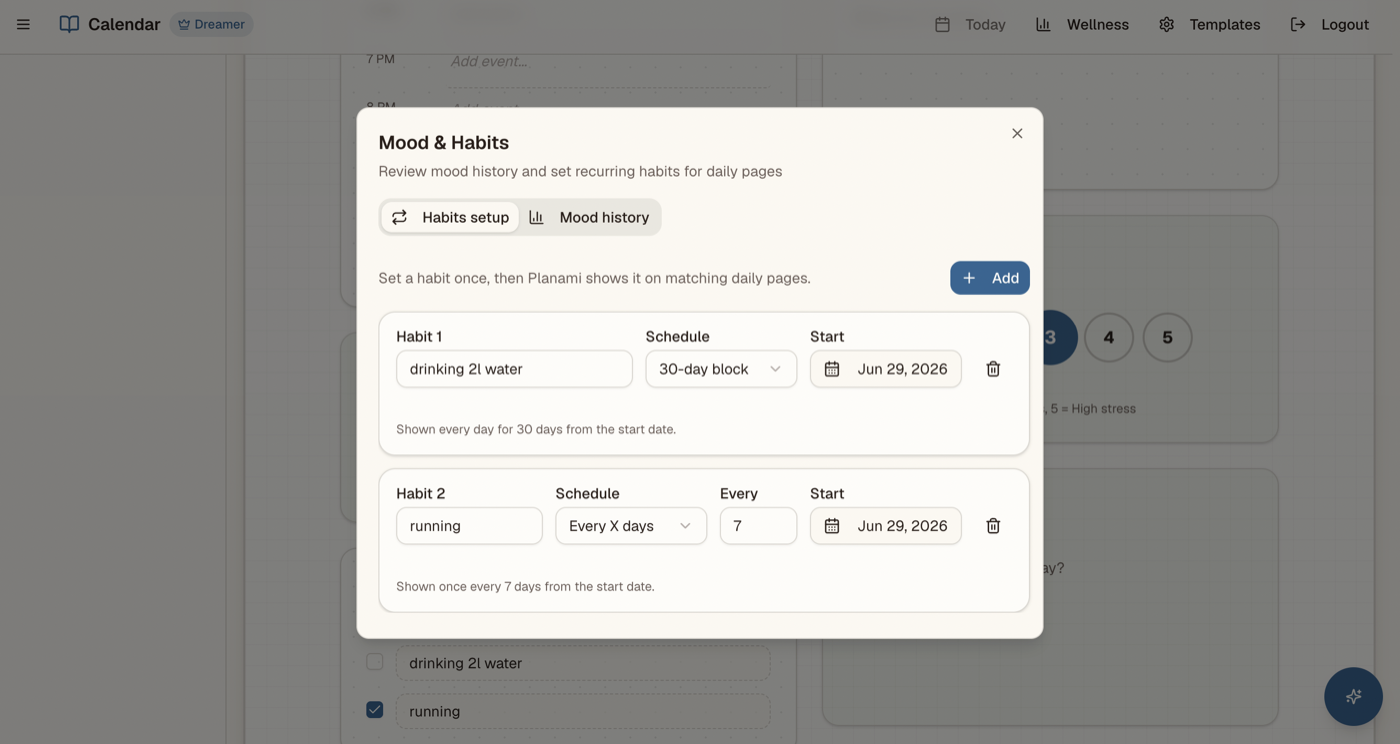
Regular tracking helps you see patterns, celebrate wins, and identify areas for improvement. Visual progress indicators can be incredibly motivating — there's something powerful about seeing a chain of successful days.
Here are effective tracking methods:
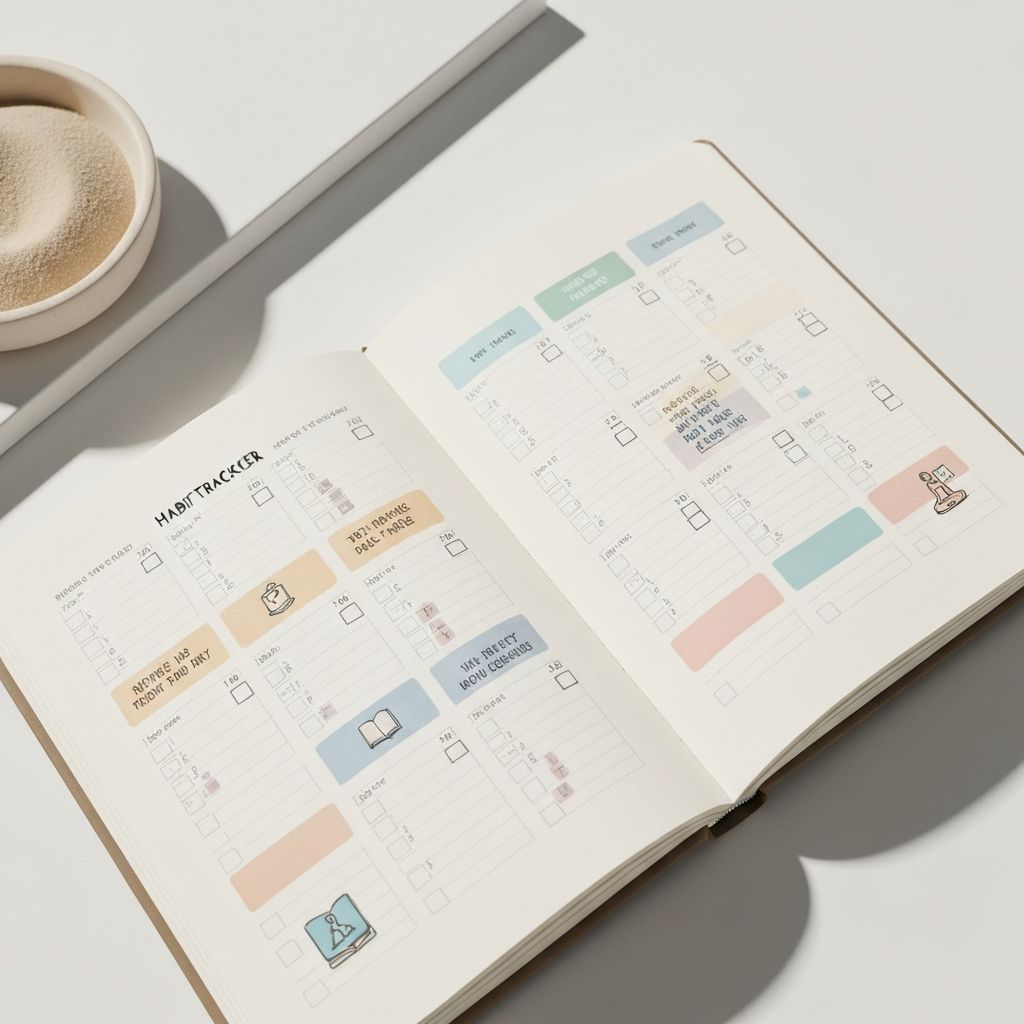
- Habit tracker: Mark each day you complete your habit with a checkmark, X, or color
- Streak counter: Track how many consecutive days you've maintained the habit
- Journal entries: Write a sentence about how the habit made you feel
- Progress photos: For physical habits, take photos to see visual changes
The act of tracking itself becomes part of the habit loop. The satisfaction of marking off another day can be its own reward.
Design Your Environment
Your environment has a huge impact on your habits. Make good habits easier and bad habits harder:
- Reduce friction: Want to read more? Keep a book on your nightstand. Want to exercise? Lay out your workout clothes the night before.
- Increase friction: Want to reduce social media? Delete apps from your phone or use a time-limiting app. Want to eat healthier? Don't keep junk food in the house.
You can't rely solely on willpower. Instead, design your environment to make the right choices the easy choices.
Reflect and Adjust
Building habits isn't a set-it-and-forget-it process. Regular reflection helps you understand what's working and what needs adjustment.
Ask yourself weekly:
- What made it easy to stick to my habit this week?
- What made it difficult?
- What can I adjust to make it easier next week?
Maybe your habit is too big and needs to be smaller. Maybe the timing is wrong. Maybe you need a different reward. Be willing to experiment and adjust.
Be Kind to Yourself
Finally, remember that building habits is a journey, not a destination. You will miss days. You will have setbacks. That's normal and expected.
The key is to not let one missed day turn into a week, or a week into a month. If you miss a day, just get back on track the next day. Don't wait for Monday, or the first of the month, or a "fresh start." Start again immediately.
Building habits that stick isn't about perfection — it's about consistency, patience, and continuous improvement. With the right approach, you can transform your life one small habit at a time.